Australian Beef
From Australian pastures to Chinese supermarkets
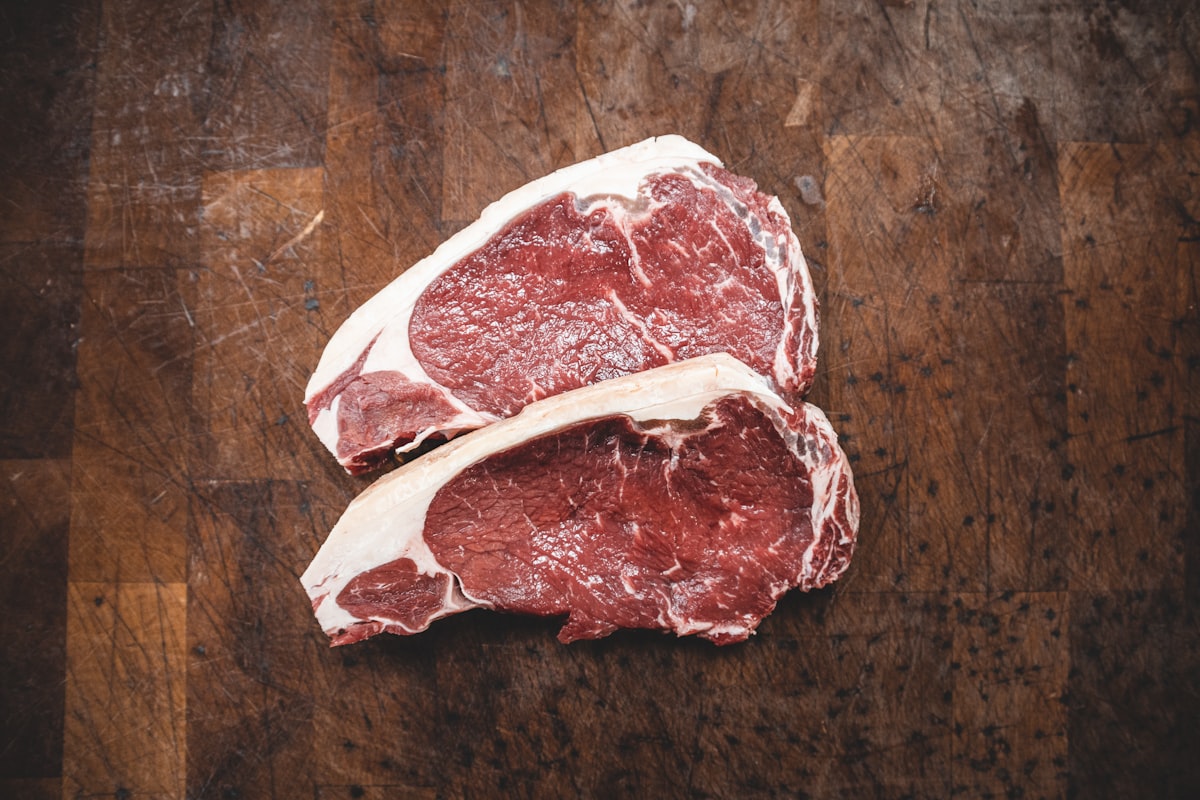
Population 27 million with vast cattle pastures, but small domestic beef demand.
14,700+ steak restaurants and a home-cooking wave drove a 54% import surge in Guangdong alone.
One province's steak appetite outpaces a small country
How Australian Beef Won China — and the Playbook for Every Foreign Meat Brand
China has become the world’s most consequential market for imported beef. In 2024, the country imported roughly 2.87 million tonnes of beef, covering more than a quarter of its total domestic demand. For a country that, just two decades ago, ate mostly pork and treated beef as a luxury, the transformation is remarkable — and it is still accelerating.
This is the story of how Australian beef became the premium default in Chinese supermarkets and steakhouses, why beef sells so well in China today, and the exact playbook a foreign meat brand should follow to enter the same market.
1. Executive Summary
The Chinese beef market is one of the clearest growth stories in global food trade. Three numbers tell the whole story:
- 2.87 million tonnes — China’s beef imports in 2024, covering 26.93% of domestic demand.
- 14,700+ — the number of steak-focused restaurants operating across China.
- 54% — the annual growth rate of Australian beef imports in Guangdong province alone.
What these numbers hide is the deeper shift: Chinese consumers are moving up the protein ladder. For decades pork dominated the Chinese table because it was cheap and familiar. Beef was a rare, expensive treat. Today a rapidly urbanising middle class, a maturing cold chain, and a new health consciousness have turned beef into an everyday aspiration — not just in restaurants, but in home kitchens across tier-1 and tier-2 cities.
For foreign meat brands, the opportunity is enormous and still open. The premium end of the market is under-served by brands, not by supply. Origin trust — the exact asset that Australian beef built over two decades — is the currency that decides who wins.
This playbook walks through the market, the reasons behind the surge, the channels that matter, the compliance path, the competitive map, and the specific steps to enter.
2. The Numbers That Matter: China’s Beef Market at a Glance
Understanding China’s beef market requires understanding both scale and trajectory.
2.1 Import scale
China imported roughly 2.87 million tonnes of beef in 2024, accounting for about 26.93% of total domestic demand. In other words, more than one in every four kilograms of beef consumed in China comes from abroad. This is not a niche import — it is a structural dependency.
2.2 Consumption growth
Chinese beef consumption per person has risen steadily for more than a decade. While still below Western levels, the direction is unmistakable. Urbanisation, rising disposable income, and changing dietary habits have all pushed beef consumption upward year after year. The gap between China’s per-capita consumption and that of developed markets is precisely what makes the growth runway so long.
2.3 Why imports matter
China’s domestic cattle industry cannot keep up with demand growth. Land constraints, feed costs and a relatively young feedlot industry mean that domestic supply grows slowly. The result is a structural gap that imports fill — and that gap keeps widening as demand grows faster than domestic production.
For foreign suppliers, this is the single most important fact: China needs imported beef, and that need is growing.
3. Why Beef Sells Like Crazy in China
The surge in beef consumption is not one story but five, layered on top of each other. Understanding each layer is essential for any brand planning to enter.
3.1 14,700+ steak restaurants and counting
China now has more than 14,700 steak-focused restaurants in operation. This is not a single chain but an entire category that has grown from almost nothing in the 1990s to a national fixture.
The category spans several tiers:
- Value steakhouse chains such as Houcaller (豪客来) and Jia Ke Lai (佳客来) that made steak accessible to mass-market consumers, often serving sizzling-plate steaks at affordable prices. These chains taught an entire generation what steak was and normalised eating beef outside the home.
- Mid-tier chains such as Wang Steak (王品) and Westside (西堤) that position steak as an occasion — birthdays, dates and business dinners — with premium service and higher price points.
- Premium steakhouses in tier-1 cities that serve imported grain-fed beef and cater to an affluent, brand-aware clientele.
The expansion of these chains matters for two reasons. First, they created demand — every new store educated hundreds of consumers about beef. Second, they created supply-chain demand — chains need consistent, traceable, high-quality beef, which is exactly what imports provide.
The category has seen churn (new openings and closures) as the market matures, but the total footprint of 14,700+ stores shows that steak has become a permanent part of Chinese dining culture, not a fad.
3.2 The home-cooking revolution in tier-1 and tier-2 cities
The biggest and most recent shift is not in restaurants but in home kitchens. Consumers in tier-1 cities like Shanghai, Beijing, Shenzhen and Guangzhou — and increasingly tier-2 cities like Chengdu, Hangzhou and Nanjing — are buying steak to cook at home.
This home-cooking wave has several drivers:
- Membership club penetration. Sam’s Club and Costco made high-quality, imported steak affordable and accessible. A family can buy a pack of Australian ribeye at a price that makes home steak night cheaper than a restaurant visit.
- E-commerce and cold chain. JD, Tmall and Douyin now deliver chilled and frozen beef to the doorstep within 24 to 48 hours. Consumers no longer need to visit a specialty store.
- Cooking content. Short-video platforms are full of “how to cook a perfect steak” tutorials, turning what was once an intimidating dish into a weekend hobby.
- The Guangdong surge. Guangdong province alone saw Australian beef imports grow 54% annually, driven by a food culture that values freshness, a dense urban population and a strong western-cuisine tradition.
The result is that beef is no longer something Chinese consumers only eat at restaurants. It has moved into the weekly shopping basket — and that is a fundamentally larger and more stable market than restaurant demand alone.
3.3 The health narrative: beef over pork
For decades, pork was the default protein in China. It was cheap, familiar and deeply embedded in Chinese cuisine. Beef is now winning on a health narrative.
Chinese consumers increasingly associate beef with higher protein quality, iron, and a “Western” image of fitness and strength. The fitness boom — gyms, bodybuilding, and health-conscious eating — has made beef a symbol of a modern, aspirational lifestyle. This is reinforced by imported beef’s image of safety, traceability and clean origin, which domestic consumers value after a series of food-safety incidents in other categories.
The health narrative is powerful because it is not about price. It is about values, and values justify a premium. A consumer who buys beef “for health” will pay more for imported, traceable, grain-fed product than for commodity beef.
3.4 Cold chain made it possible
None of the above would work without cold chain. China’s cold-chain infrastructure has matured dramatically over the past decade — from port facilities and bonded warehouses to last-mile chilled delivery.
Imported beef arrives either chilled (0–4°C, the premium route) or frozen. Chilled beef commands a significant premium because it preserves texture and flavour, and it requires a flawless cold chain from abattoir to shelf. Australia has been a leader in chilled beef, which is one reason it owns the premium end of the market.
For any foreign brand, cold chain is not a nice-to-have — it is the entry ticket to the premium segment. A brand that cannot guarantee temperature integrity will be pushed down into the frozen commodity tier.
3.5 The middle-class upgrade
Underneath all of this is the single biggest macro force: China’s middle class, now numbering in the hundreds of millions, is trading up.
This upgrade shows up in every category, but in food it is especially visible. Consumers who grew up eating pork are now buying imported beef, Norwegian salmon and Chilean cherries. They are not just buying calories; they are buying safety, status and experience. Imported beef — with its origin story and premium positioning — fits this upgrade perfectly.
4. Channel Deep Dive
Beef reaches Chinese consumers through four distinct channels, each with its own economics, audience and entry requirements. A successful entry usually sequences through several of them.
4.1 Membership clubs: Sam’s Club and Costco
Membership clubs are the single most important channel for premium imported beef. Sam’s Club and Costco have both expanded aggressively in China, and beef is one of their signature categories.
Why clubs matter:
- Trust. The club’s own brand lends credibility to the beef it sells. Members trust that a Sam’s Club ribeye is authentic and traceable.
- Volume and margin. Clubs buy in large, predictable volumes and can afford premium cuts.
- The home-cooking audience. Club shoppers are exactly the tier-1 and tier-2 families driving the home-cooking wave. They buy steaks in bulk for the freezer and weekly meals.
Getting into a club is a serious commercial negotiation — buyers evaluate landed cost, supply reliability, packaging and sell-through potential. But once in, it is a stable, high-volume channel that builds brand awareness quickly.
4.2 Premium supermarkets: Hema, Ole’ and others
Premium supermarkets are the second pillar. Hema (Alibaba’s “new retail” supermarket), Ole’ and city’ super serve affluent urban shoppers who want high-quality chilled beef with clear origin and cut information.
These stores emphasise freshness, presentation and storytelling. A brand that can tell its origin story — pasture-raised, grain-fed, hormone-free — wins shelf space and price premium here.
4.3 E-commerce: JD, Tmall and Douyin
E-commerce has turned imported beef into a doorstep-delivered category.
- JD is the strongest platform for frozen and chilled beef, with its own cold-chain logistics network and a reputation for authenticity.
- Tmall reaches a broad consumer base, with brand flagship stores as the standard model.
- Douyin drives discovery through short videos and livestreams, where sellers demonstrate quality and offer flash deals.
E-commerce is the fastest way to test the market, gather consumer feedback and build brand before committing to offline retail. Most foreign brands start online, then expand offline.
4.4 Steakhouse chains and foodservice
Restaurant and foodservice demand is the fourth channel. Steakhouse chains and western restaurants buy in volume and need consistent, traceable supply.
This channel is less visible to consumers but critically important for volume. Winning a chain contract requires meeting strict specifications on cut, grading, consistency and food safety — and it builds a stable revenue base.
5. Compliance & Entry Requirements
Entering China’s beef market is not simply a matter of shipping product. The compliance path is real, and it must be navigated correctly from the start.
5.1 Country access and quarantine
China maintains a list of countries and establishments approved to export meat. Australia, along with other major exporters, holds access, but that access is subject to ongoing regulatory review. Any foreign brand must ensure its processing facilities are on China’s approved list and that certificates of origin and quarantine accompany every shipment.
5.2 Chinese labelling
All imported beef must carry a Chinese label meeting national standards. The label must show product name, origin, producer, importer, storage conditions, and production date, among other required fields. Labelling errors are a common cause of customs delays and rejections.
5.3 Tariffs and duties
Imported beef is subject to tariffs and value-added tax. Rates vary by cut and country of origin, and trade agreements can reduce tariffs for certain origins. A full landed-cost model — including tariff, VAT, freight, cold chain and distribution — is essential before pricing for the market.
5.4 Cold chain standards
Chilled and frozen beef have different requirements, and chilled is the harder standard. From port inspection to bonded warehousing to last-mile delivery, every link must maintain the correct temperature range with documented compliance. This is where many entrants fail — not on product quality, but on cold-chain discipline.
6. The Competitive Landscape
China’s imported beef market is a contest between several major origins, each with a distinct position.
6.1 Australia: the premium default
Australia owns the premium end of the market. Its strengths are its clean, pasture-and-grain story, its leadership in chilled beef, and its long history of supplying China. Australian beef commands the highest price points and dominates premium supermarket and club shelves.
6.2 United States: rebuilding
American beef is a respected premium origin with strong grain-fed marbling, but its access has been interrupted at times by trade and regulatory friction. When access is open, US beef competes directly with Australia at the premium end.
6.3 Brazil: the volume leader
Brazil is the world’s largest beef exporter and a major supplier to China, focused on volume and value. Brazilian beef is more price-competitive and dominates the frozen, value segment of the market.
6.4 Argentina, Uruguay and others
Argentina, Uruguay and New Zealand also supply China, each with niche positions. Argentina offers pasture-raised value; Uruguay has a growing grass-fed premium story; New Zealand is a smaller but respected supplier.
The strategic insight for any new entrant is this: the volume segment is crowded and price-driven, but the premium, branded segment is still open. Australia proved that origin trust and a clean story can win at the top of the market — and there is room for more differentiated, brand-led entrants.
7. The Opportunity for Foreign Beef Brands
The data points to a clear and actionable opportunity.
7.1 The premium gap
China imports 2.87 million tonnes of beef, but most of it is commodity product. The premium, branded end of the market — where consumers pay for origin, traceability and story — is far less crowded. This is where a foreign brand can win without competing on price.
7.2 The branding opportunity
Chinese consumers trust imported beef, but few brands have built a consumer-facing identity. Most imported beef is sold as a commodity with a country name, not a brand. A foreign producer that builds a real brand — with a name, a story, packaging and a digital presence — can capture a premium that commodity sellers cannot.
7.3 The actionable entry playbook
For a foreign beef brand, the sequence looks like this:
- Validate fit. Confirm your cut, grading and price point match a defined Chinese consumer segment.
- Model landed cost. Build a full cost model including tariff, VAT, freight and cold chain before pricing.
- Secure compliance. Ensure facility approval, labelling and quarantine documentation are in order.
- Start online. Launch on JD or Tmall to test demand, gather feedback and build brand.
- Win a club. Once proven, negotiate entry into Sam’s Club or Costco for volume and credibility.
- Scale offline. Expand into premium supermarkets and steakhouse chains.
- Tell the story. Invest in origin storytelling — pasture, feed, traceability and quality — across every channel, because story is what justifies the premium.
This is exactly the path Australian beef followed, and it is the path still open to any brand that can deliver quality, compliance and a compelling origin story.
8. Conclusion
Australian beef did not win China by accident. It won by being early, by leading in chilled product, and by building a clean origin story that Chinese consumers trust. Today the market it helped create — 2.87 million tonnes of imports, 14,700 steak restaurants, and a home-cooking wave still accelerating — is bigger than any single origin can serve.
For foreign meat brands, the lesson is simple: the volume game is crowded, but the premium, branded game is still winnable. China’s middle class is trading up, its cold chain is ready, and its consumers are hungry for imported beef with a story they can trust.
The only question is who tells the next story — and whether they tell it before their competitors do.