Norwegian Salmon
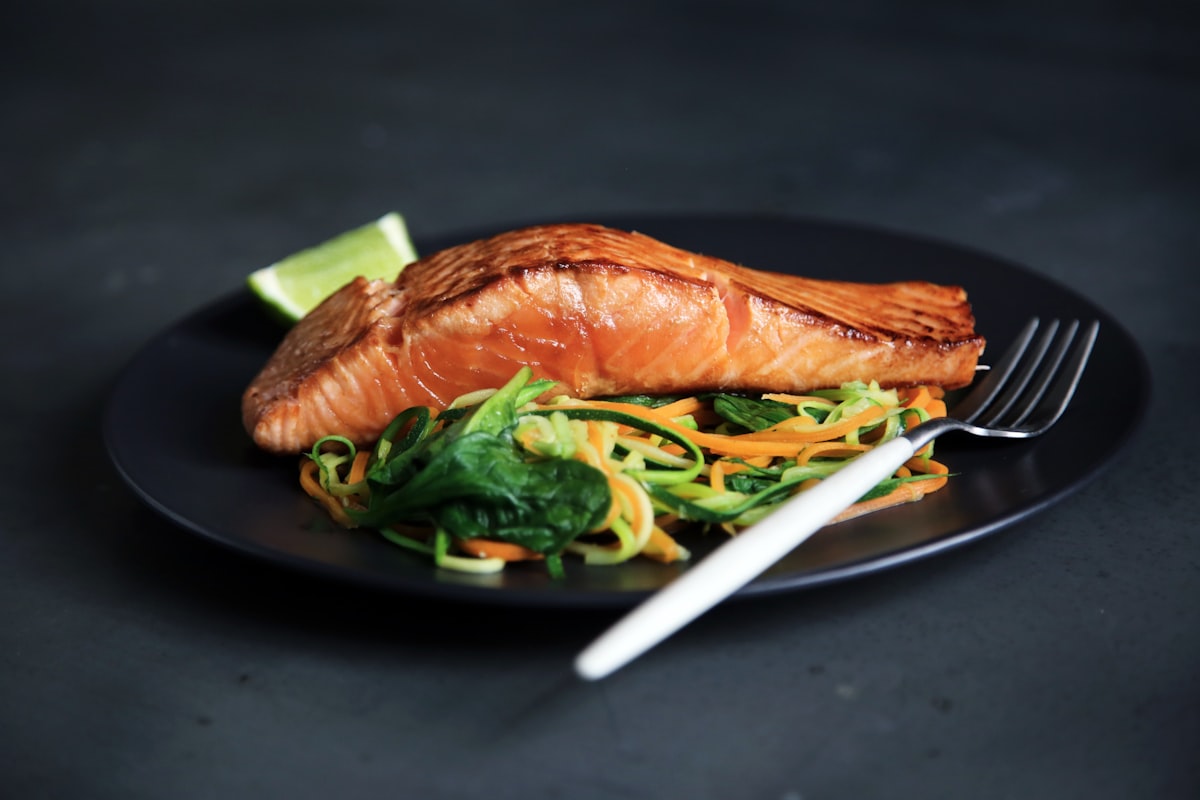
Ice-fresh salmon, 48 hours from fjord to table
Population 5.5 million. Salmon farming was built over 50 years, mostly for export.
China went from near-zero to a top salmon market in 10 years — 48 hours from fjord to table.
50 years of farming, matched by China's demand in a decade
Executive Summary
Few food categories illustrate the speed of China’s consumer transformation as cleanly as Atlantic salmon. A decade ago, salmon was a niche protein confined to high-end Japanese restaurants in first-tier cities, imported in small volumes for a thin layer of affluent diners. Today, China is one of the world’s largest and fastest-growing salmon import markets, and Norway — the country that effectively invented industrial salmon farming — is its most influential supplier.
This transformation was not an accident of taste. It was engineered by three forces converging at once: a nationwide upgrade in cold-chain logistics that made fresh seafood viable far from the coast, a cultural pivot toward Japanese cuisine and “clean” protein driven by younger, health-conscious consumers, and a deliberate, well-funded market-development effort by the Norwegian Seafood Council (NSC) and Norwegian exporters. The result is a market where salmon moved from luxury garnish to mainstream supermarket staple in roughly ten years.
For Norwegian producers, the China opportunity is now structural rather than opportunistic. China’s salmon import volumes crossed the 100,000-tonne threshold in 2024, and the Norwegian Seafood Council has reported that China entered the global top three markets for Norwegian seafood for the first time. Volumes of Norwegian farmed salmon to China have doubled in a single year, and the NSC now runs year-round campaigns, retail partnerships, and chef-training programs across the country. Yet the market is also becoming crowded and competitive: Chile, the Faroe Islands, Australia, and a resurgent Canada are all fighting for the same refrigerated shelf.
This case study examines how Norway built that position, where the demand actually comes from, which channels move the product, what compliance entry requires, who the competitors are, and — most importantly — where the remaining opportunity lies for brands and exporters that want to capture the next decade of Chinese salmon consumption.
The Numbers That Matter
A Market That Broke the 100,000-Tonne Barrier
China’s appetite for imported salmon has grown from a rounding error in global trade statistics to a top-tier destination market. According to Chinese customs data reported by domestic seafood industry bodies, China’s salmon imports surpassed 100,000 tonnes in 2024 — a milestone that arrived several years ahead of most industry forecasts. The same reports flag retail demand as a key structural driver: it is no longer restaurants alone pulling volume, but ordinary households buying salmon steaks and fillets for home cooking.
The value picture is equally significant. While average import prices softened in 2024 as supply normalized after the pandemic-era volatility — Chinese trade associations noted average prices falling nearly 20% in the first half of the year — total import value remains comfortably above USD 1 billion annually. Falling unit prices, counterintuitively, have been good for penetration: cheaper salmon widened the consumer base and pulled small-format fish into supermarkets and e-commerce baskets.
Norway’s Grip on the Market
Norway is not merely the largest supplier; it is the market’s default reference brand. The Norwegian Seafood Council reported in 2024 that Norway’s share of China’s salmon market hit a ten-year high, and export volumes of Norwegian farmed salmon to China have doubled year over year. In monthly reporting, Norwegian salmon exports to China have swung as high as a 181% surge in a single month, and industry publications note that China now drives growth even in periods when Norwegian salmon exports to other regions decline.
The macro context matters here. Norway is the world’s largest producer of farmed Atlantic salmon, harvesting well over 1.4 million tonnes a year from a coastline whose cold, deep fjords are ideally suited to the species. Norwegian seafood exports set a new record of NOK 181.5 billion in 2025, and China’s elevation into the top three destination markets is one of the clearest signals that the center of gravity in global salmon demand is shifting east.
From Fjord to Table in 48 Hours
The operational claim behind Norwegian salmon’s China story — “48 hours from fjord to table” — is not marketing fluff. Modern Norwegian salmon is slaughtered, processed, and chilled on the day of harvest, packed in ice or vacuum-sealed under modified atmosphere, and air-freighted to Chinese hubs within a day. From there, domestic cold-chain networks distribute to wholesale markets, restaurants, and retail within another 24 hours. This speed is the single most important reason a Norwegian fish can sit on a Shenzhen supermarket shelf with a “fresh, not frozen” label while a cheaper, frozen alternative competes in a different category altogether. The 48-hour promise is effectively a logistics product as much as a seafood product.
Why Salmon Sells in China
The Health and “Clean Protein” Boom
The deepest driver of salmon demand is a nationwide reorientation toward what Chinese consumers call “healthy” and “light” eating. Salmon occupies a near-perfect position in this value system: it is high in protein, rich in omega-3 fatty acids, low in the heavy-oil, heavy-sauce profile of traditional banquet cuisine, and visually “clean” — an orange fillet that photographs well and requires minimal cooking. For a generation raised on food-safety anxieties and now obsessing over nutrition labels, salmon reads as both safe and aspirational.
This is not passive preference; it is a generational identity shift. Millennial and Gen Z consumers in China’s cities increasingly define status through what they don’t eat — less sugar, less oil, less processed meat — and salmon is the rare food that satisfies both the health narrative and the luxury narrative at once. It is a protein you can eat guiltlessly and still post to social media.
Japanese Cuisine and the Raw-Fish Culture
China’s embrace of salmon cannot be separated from its embrace of Japanese dining. The explosion of sushi, sashimi, and izakaya-style restaurants across Chinese cities created a mass market for raw fish, and salmon became the entry-level species of that category — more affordable than tuna, milder than mackerel, and universally recognizable. Chinese consumers learned to associate salmon with the ritualized, high-quality experience of Japanese cuisine, and that association carried the product out of the restaurant and into the home kitchen.
Critically, this channel established a taste and a format. Consumers who first ate salmon as sashimi later bought salmon to pan-sear, air-fry, or serve over rice bowls at home. The Japanese dining boom was the training ground; the home market is where the volume now lives.
Fitness Culture and High-Protein Diets
The rise of gym culture, marathon running, and wellness influencers gave salmon a second, highly specific demand engine: the fitness demographic. Bodybuilders, CrossFit enthusiasts, and white-collar “self-improvement” consumers treat salmon as a precision macronutrient source — measured grams of protein, controlled fat, no breading, no sugar. Fitness apps and meal-prep services across China now routinely include salmon as a premium protein option, and gym-adjacent food brands market it as “post-workout recovery” food. This segment is small in volume but enormous in influence: it validates salmon’s health halo for the far larger mainstream that simply wants to “eat better.”
Cold Chain as the Enabler
None of the above would matter without infrastructure. China’s cold-chain network has been one of the country’s quietest but most consequential infrastructure builds of the past decade — refrigerated ports, temperature-controlled warehousing, last-mile chilled delivery, and cold lockers in residential compounds. For salmon, this transformed the addressable market from coastal cities with immediate airport access to virtually every tier-2 and tier-3 city in the country. A fish that once had to be sold within hours of landing can now be held and delivered in perfect condition hundreds of kilometers inland. Cold chain is the difference between a Shanghai-only market and a national market, and it is the single most underrated factor in salmon’s China growth.
Middle-Class Consumption Upgrades
Finally, salmon is a textbook case of Chinese consumption upgrading. As disposable income rose through the 2010s and early 2020s, Chinese households moved protein spending up the value chain — from pork and freshwater fish toward beef, lamb, and imported seafood. Salmon sits at the top of that ladder: an imported, branded, story-rich product that signals a household has arrived. The willingness to pay a premium for a Norwegian origin label — versus a generic “salmon” — is exactly the kind of origin-brand loyalty that took decades to build in wine, dairy, and beef, and salmon has achieved it in a fraction of the time.
Channel Deep Dive
Japanese Restaurants and the Foodservice Base
Foodservice remains the historical anchor of salmon demand. Sushi chains, omakase restaurants, premium hotpot brands, and hotel buffets buy fresh whole fish and fillets in bulk, and they are the least price-sensitive buyers in the chain because salmon is central to their value proposition. The restaurant channel also serves as the market’s demand shock absorber: when retail softens, foodservice volume tends to hold. For exporters, foodservice buyers want consistency above all — reliable grading, fat content, color, and a predictable delivery cadence — which plays directly to Norway’s industrial farming strengths.
Premium Retail: Sam’s Club and Hema
The most visible symbol of salmon’s mainstreaming is its presence in premium membership retail. Sam’s Club and Costco in China now sell Norwegian salmon as a marquee fresh item, often with origin signage and a “farmed in Norway” narrative attached. Hema (Freshippo), Alibaba’s fresh-food flagship, has gone further: it partnered directly with the Norwegian Seafood Council to introduce and promote Norwegian seafood, integrating salmon into ready-to-eat sushi counters, meal kits, and app-based home delivery. These retailers are the channel through which salmon became a habitual household purchase rather than an occasional indulgence.
Fresh E-commerce and Instant Delivery
China’s on-demand grocery platforms — Meituan, Ele.me, JD Daojia, Dingdong, and Hema’s own delivery network — have compressed the distance between a salmon fillet and a dinner table to about 30 minutes. Fresh e-commerce merchants source chilled salmon in bulk, portion it, and deliver it with ice packs in insulated bags. This channel disproportionately reaches the young urban consumer who will not visit a wet market and who values convenience as highly as freshness. It is also where origin labeling and brand storytelling matter most, because the consumer is buying from a screen and must be convinced the fish is Norwegian, safe, and fresh before checkout.
Livestream Commerce
Livestream selling — on Douyin, Taobao Live, and Kuaishou — is the newest and fastest-growing salmon channel. Hosts sell whole fish, fillet sets, and sashimi boxes in real time, demonstrating the color, fat marbling, and origin documentation on camera. Livestream’s power for salmon is emotional and immediate: it converts the “is it really fresh?” skepticism into a live visual proof, and it bundles scarcity (“only 500 boxes tonight”) with storytelling (“straight from the Norwegian fjords”). For brands willing to invest in a trained host and reliable fulfillment, livestream is now a legitimate volume channel, not a sideshow.
Compliance & Entry
GACC Registration and Approved Exporter Lists
Entry into China’s seafood market is governed by the General Administration of Customs of China (GACC, formerly part of AQSIQ). Foreign aquatic-product processing establishments and cold-storage facilities must be registered with GACC and appear on its approved exporter list before their products can clear customs. Norway’s long-standing bilateral trade relationship and the NSC’s proactive government engagement mean Norwegian plants are already well represented on these lists — a structural advantage newer entrants must work years to replicate. For any new exporter, confirming plant registration and keeping documentation current is the non-negotiable first step.
Aquatic Product Inspection and Quarantine
Imported salmon is subject to China’s import inspection and quarantine regime for aquatic products. Consignments require health certificates from the exporting country’s competent authority, and shipments are tested for veterinary drug residues, heavy metals, and microbiological parameters at the port of entry. The process is protocol-driven and, for an established Norwegian supplier, largely routine — but it is unforgiving of documentation errors. A single failed certificate or an unregistered facility can hold an entire container at the port, destroying the 48-hour freshness advantage. Compliance is therefore not a back-office function; it is the core of the product promise.
Cold Chain Integrity as a Regulatory and Brand Issue
China’s regulators have tightened cold-chain supervision sharply since the pandemic, when imported frozen and chilled goods became a focus of traceability controls. Salmon importers must now demonstrate an unbroken temperature record from origin to destination, with traceability codes attached to cartons. This regulatory pressure dovetails with brand interest: a documented cold chain is both a compliance requirement and a marketing asset. Norwegian exporters who can attach a clean temperature log and a verifiable origin story to every carton are selling compliance itself as a differentiator against less-transparent competitors.
Competitive Landscape
Norway: The Default Brand
Norway’s competitive position is the strongest of any origin because it has successfully conflated the country’s name with the category itself. “Norwegian salmon” functions in the Chinese market much as “Champagne” does in wine — a geographic indicator of quality that commands a premium over undifferentiated salmon. Norway’s advantages are structural: the world’s largest production base, decades of farming expertise, direct air-freight routes, deep GACC registration coverage, and a Seafood Council that has spent heavily on consumer education. Its vulnerability is price: Norwegian salmon is frequently the most expensive origin on the shelf, and price-conscious buyers trade down when the spread widens.
Chile: The Volume Challenger
Chile is the world’s second-largest salmon producer and Norway’s most direct competitor for the Chinese market. Chilean salmon is typically cheaper, and Chile has invested in its own marketing and trade promotion in China. Where Chile struggles is perception: it lacks Norway’s clean, cold-water origin story, and its salmon is more often sold frozen or in foodservice bulk rather than as premium fresh retail product. Chile competes on price and availability; Norway competes on brand and freshness.
The Faroe Islands: The Premium Niche
The Faroe Islands occupy a fascinating niche: a tiny producer whose salmon commands a premium equal to or above Norway’s, prized for fat content and flavor. Faroese salmon has grown significantly in the Chinese market, positioning itself as the connoisseur’s choice for high-end omakase and specialty retail. Its volume is small relative to Norway and Chile, but its presence at the top of the market pressures Norway’s premium positioning and forces Norwegian brands to defend the “best in class” narrative continuously.
Australia and Canada: The Wild Cards
Australia and Canada round out the competitive field. Australian salmon benefits from proximity, clean-branding, and a strong bilateral trade relationship, though its volume is limited by production constraints. Canada, long a minor player in China, has been described in Chinese trade press as “suddenly rising” — its market share growing as buyers diversify origins to manage price and supply risk. Neither threatens Norway’s leadership today, but both add competition at the margins and give Chinese importers negotiating leverage.
The Opportunity
Where the Next Decade of Demand Will Come From
The most valuable insight in the current market data is that salmon growth is shifting from restaurants to households, and from first-tier cities to second- and third-tier ones. The consumer who buys a Norwegian salmon fillet on Hema in Chengdu or via Douyin livestream in Hefei is not the same consumer who discovered salmon in a Tokyo-style sushi bar a decade ago. The next phase of growth is a retail, convenience, and e-commerce story, not a fine-dining story — and that rewards brands that build household recognition rather than chef relationships.
Playbook for Entering Brands
For a Norwegian producer or brand entering or expanding in China, the executable playbook has several concrete layers. First, win at origin storytelling: register plants with GACC, document the cold chain, and attach a verifiable “fjord to table” narrative to every SKU — the origin label is the pricing power. Second, anchor in one premium retail partnership: a single Sam’s Club or Hema placement, with origin signage and in-store sampling, is worth more than a hundred anonymous wholesale shipments. Third, build a livestream and short-video presence: hire local hosts, demonstrate freshness on camera, and sell portioned SKUs sized for one or two people rather than whole fish. Fourth, segment the portfolio: protect the premium fresh brand for retail and foodservice while using frozen or secondary cuts to compete on price against Chile. Fifth, invest in the second- and third-tier city cold chain: the brands that solve inland distribution first will own the fastest-growing slice of the market.
The Risk to Manage
The honest counterweight to the opportunity is price compression. As supply normalizes and average import prices fall, margin pressure will intensify, and the premium that Norwegian origin currently commands will be tested by cheaper Chilean volume and rising Faroese prestige. The brands that survive will be those that convert origin into an experience — traceability, freshness proof, recipe content, and trusted retail presence — rather than resting on a country name alone.
Conclusion
Norwegian salmon’s rise in China is a case study in how infrastructure, culture, and deliberate marketing can turn an imported luxury into a mainstream staple in a single decade. China went from near-zero to a top-three destination for Norwegian seafood, crossed 100,000 tonnes of annual salmon imports, and now consumes Norwegian salmon through every channel from omakase counters to 30-minute grocery delivery. The 48-hour fjord-to-table promise, backed by GACC compliance and a documented cold chain, turned a logistics capability into a brand.
The lesson for any foreign food brand is that China rewards three things above all: a verifiable origin story, an unbroken cold chain, and a relentless presence in the channels where young urban consumers actually shop. Norway built its salmon empire on those three pillars — and the next decade will belong to whoever executes them fastest.