Tianjin: Five Straight Years of $100M+
A city's manufacturers kept buying for five straight years
Executive Summary
For five consecutive editions of the China International Import Expo (CIIE), enterprises from Tianjin — the northern port metropolis that anchors the Beijing-Tianjin-Hebei economic zone — have signed import orders worth more than US$100 million each year. It is a streak worth studying closely, not because US$100 million is a large number in the context of China’s trillion-dollar import economy, but because of what the streak reveals about who is buying, what they are buying, and why the buying is structurally durable rather than a one-off promotional spike.
The Tianjin case is a concentrated, repeatable example of a broader pattern: China’s northern manufacturing base is importing capital equipment, precision components, medical devices, and agricultural commodities to fuel an industrial upgrade that does not depend on consumer sentiment. At the 8th CIIE in November 2025, the Tianjin trading group — nearly 1,000 registered enterprises and institutions sending more than 2,500 delegates — signed 55 procurement intents with a total value roughly 6% higher than the previous year. At the 7th CIIE in 2024, the city’s total transaction exceeded the prior edition, led by medical devices, construction machinery, frozen goods, and palm oil. At the 6th CIIE in 2023, Tianjin signed 71 procurement orders across medical devices, machine-tool components, and frozen food.
For a foreign supplier, the takeaway is direct: Tianjin is not a “maybe” market. It is a port with the logistics to move imported goods inland to 100 million-plus consumers, a manufacturing economy that must keep importing machinery and components to modernize, and a trading-group apparatus that turns each CIIE into a structured procurement event. This article unpacks the story, the numbers, and the specific, executable ways a foreign exporter can attach itself to that recurring demand.
The Story
A streak that started quietly and compounded
The “five consecutive years of US$100 million-plus orders” narrative did not begin as a marketing slogan. It emerged from a pattern in local reporting: every November, when the CIIE closes in Shanghai, Tianjin’s official media announce that the municipal trading group — the coordinated delegation of buyers, state-owned enterprises, private manufacturers, and trade companies that the city organizes for the expo — has again locked in import commitments running into nine figures. In November 2025, the Jinwan Bao and Enorth.com.cn ran the streak as a headline in its own right: Tianjin enterprises had “broken out of the circle” at the CIIE by signing nine-figure orders for the fifth straight year.
The streak matters for a subtle reason: continuity. Import deals at trade shows are often thin — memorandums signed for publicity, then quietly renegotiated or abandoned. Tianjin’s streak is different because it tracks an underlying procurement rhythm. The same kinds of buyers return each year; the same categories dominate; and the total keeps inching upward. That is the signature of real, recurring demand rather than a government-choreographed photo opportunity.
The flagship deal of 2025
The most instructive single deal of the 8th CIIE came from Tianjin Longchuang Hengsheng Industrial Co., Ltd., a precision-equipment manufacturer based in Jinghai District. The company signed a US$110 million import order while simultaneously launching what local media called its “Smart Factory 2.0” project — a modernization push in which imported technology is not an end in itself but the input into the company’s own digital and automation upgrade. This is the pattern foreign suppliers should internalize: Tianjin’s buyers are not stockpiling imports; they are importing the machinery, sensors, and control systems that will run their next-generation production lines.
Jinghai District has become a quiet protagonist in this story. The district’s trading sub-group signed orders above US$100 million at the 7th CIIE in 2024 as well, and again exceeded US$100 million in 2025. One district, in one northern municipality, producing nine-figure import commitments two years running is a concentration of demand that most foreign exporters do not have on their radar.
The Numbers That Matter
The 8th CIIE, 2025: scale and mix
The 2025 Tianjin delegation was the largest and most structured on record. Official figures put the group at nearly 1,000 registered enterprises and institutions, with more than 2,500 attendees — a meaningful expansion from earlier years. Over the six days of the expo, the group signed 55 procurement intents, and total intended procurement value rose about 6% over the 7th CIIE. What Tianjin bought spanned the full industrial spectrum: technical equipment, industrial components, medical devices and pharmaceuticals on the capital-goods side; meat, aquatic products, dairy, soybeans, and palm oil on the food and agriculture side.
That split is the single most important analytical fact in this article. Tianjin’s CIIE basket is not a consumer-luxury basket. It is an industrial-inputs-plus-food-commodities basket. Both halves are driven by forces that persist through economic cycles: factories must retool, and a northern urban population of well over 13 million must be fed.
The 7th CIIE, 2024: transaction value above the prior year
At the 7th CIIE in November 2024, the Tianjin trading group reported total transaction value exceeding the previous edition. The leading categories, reported by the municipal commerce bureau, were medical devices, construction machinery, frozen goods, and palm oil. The presence of construction machinery is notable: it signals that Tianjin’s infrastructure and manufacturing investment cycle was still spending on imported heavy equipment even as broader Chinese investment sentiment cooled.
The 6th CIIE, 2023: 71 orders
At the 6th CIIE in November 2023, Tianjin signed 71 procurement orders, with cumulative transaction value again above the prior year. The category mix — medical devices, machine-tool components, and frozen food — previews exactly the pattern that later years would confirm. Machine-tool components deserve particular attention: they are the feedstock of Tianjin’s precision-manufacturing and automotive supply chains, and they are imported year after year because domestic substitution in ultra-precision machining remains a work in progress.
Earlier years: the foundation
The streak did not begin from zero. At the 4th CIIE in 2021, Tianjin’s trading group reported strong results, with the Dongjiang free-trade sub-group alone growing its global procurement by 21%. At the 5th CIIE in 2022, the Tianjin Port Free Trade Zone’s trading group again reported substantial results, and reporting from the period emphasized that foreign investors were “adding weight” in Tianjin — increasing their local commitments rather than trimming them. By the time the five-year streak became a headline in 2025, the habit of structured annual procurement was already entrenched.
Why Tianjin Keeps Buying
A northern manufacturing base that must retool
Tianjin is one of China’s four centrally administered municipalities and one of its oldest industrial cities. Its manufacturing profile — machinery, automotive, petrochemicals, aerospace, electronics, and increasingly precision equipment and new materials — is exactly the kind of asset base that requires continuous capital-equipment imports. A factory cannot modernize once and stop; automation, digital controls, and precision tooling have multi-year replacement cycles. That is why “technical equipment” and “industrial components” appear at the top of Tianjin’s CIIE basket every single year.
The 2025 Longchuang Hengsheng deal illustrates the mechanism. A precision-equipment maker importing US$110 million of technology while rolling out “Smart Factory 2.0” is converting foreign machinery into domestic competitiveness. Every Tianjin manufacturer executing a similar upgrade is a recurring customer for foreign machine-tool builders, sensor makers, robotics firms, and industrial-software vendors.
Port and logistics that lower the cost of importing
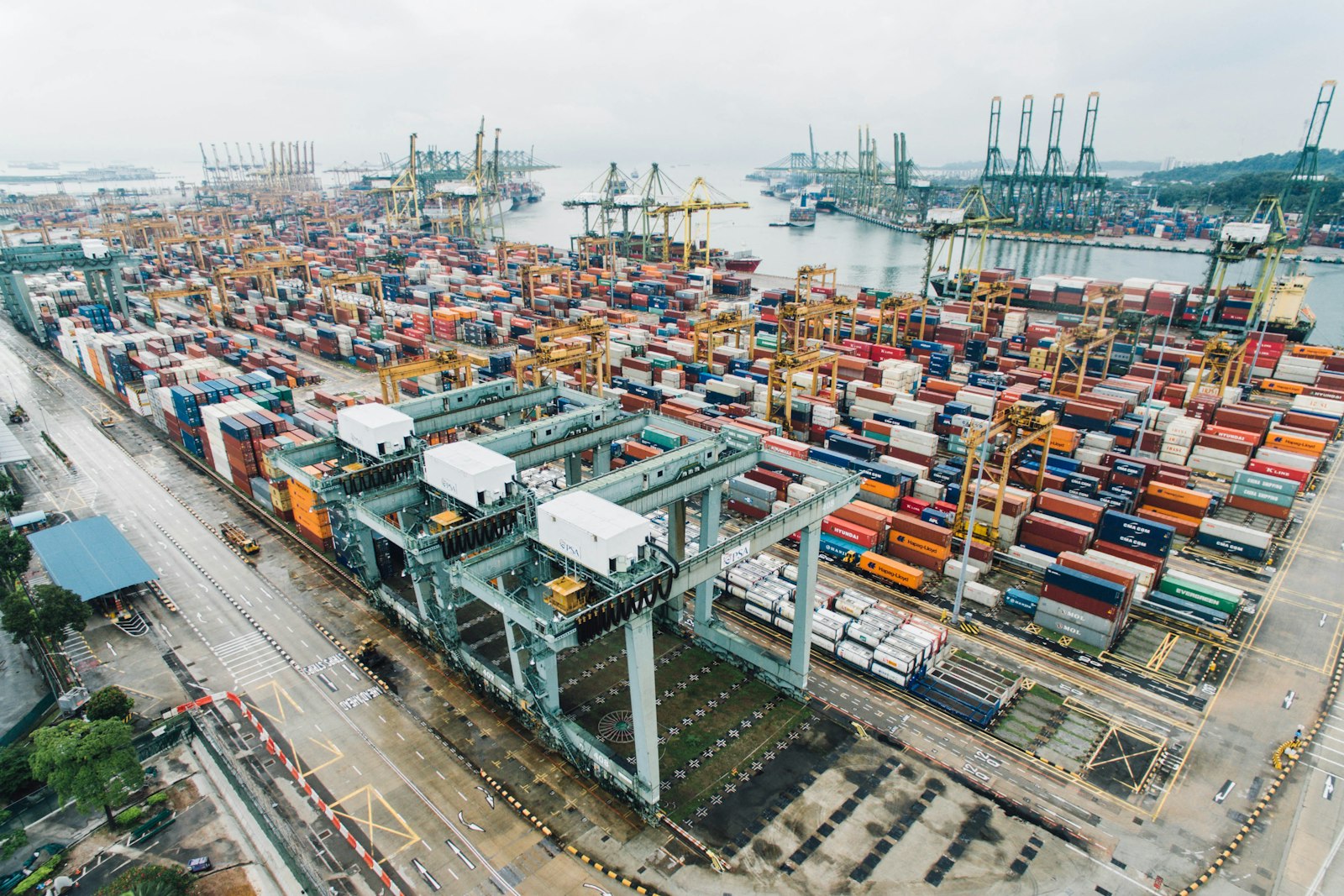
Tianjin Port is the maritime gateway for Beijing, Tianjin, Hebei, and the broader “Three-North” region — the landlocked northern provinces that depend on it for access to global markets. It is consistently among the world’s busiest container ports, and its international shipping-center ranking has improved for two consecutive years, reflecting investment in berths, channels, multimodal rail links, and expanded ocean routes. For an importer, the port is the difference between a viable landed cost and a prohibitive one. Tianjin enterprises buy heavily at the CIIE partly because their city is the cheapest, fastest place in northern China to bring the goods ashore.
The food-and-agriculture half of Tianjin’s basket is a direct consequence of port infrastructure. Frozen meat, aquatic products, soybeans, and palm oil are bulk, cold-chain, or commodity cargoes that only make economic sense with efficient discharge and distribution. Tianjin’s cold-chain and bulk-handling capacity turns the city into a natural import-and-redistribution node for the entire Beijing-Tianjin-Hebei region of roughly 110 million people.
Industrial-upgrade procurement as policy
Tianjin’s purchases are also aligned with explicit national and municipal policy. China’s industrial policy has for years pushed “new quality productive forces” — an upgrade toward advanced manufacturing, automation, and green technology — and Tianjin’s municipal government treats the CIIE as a procurement instrument for exactly that agenda. When the trading group prioritizes technical equipment and industrial components, it is not improvising; it is executing a strategy in which imported technology accelerates domestic capability. For foreign suppliers, this is a double-edged signal: the demand is genuine and policy-backed, but it also means the buyers are sophisticated and are importing to eventually compete. The window to supply the upgrade is open now and will not stay open forever in every category.
The Market Behind It
Tianjin and the Beijing-Tianjin-Hebei economy
Tianjin’s GDP grew 5.1% in 2024, in line with the national pace, and the city’s economic strategy is explicitly built around “port-industry-city” integration — using the port to drive manufacturing and the manufacturing to drive the city. With a population above 13 million and direct economic integration into Beijing (the national capital) and Hebei (a province of more than 70 million), Tianjin sits at the center of a consumption and industrial catchment that is among the largest in the world.
For an importer of food, the catchment is the consumer story: meat, dairy, and seafood flowing through Tianjin reach the dinner tables of Beijing and the surrounding cities, where incomes are high and cold-chain logistics have matured rapidly. For an importer of capital goods, the catchment is the factory story: Tianjin’s own plants plus the supply chains they feed in Hebei and Beijing are the end users of imported machine tools, components, and medical equipment.
The demand is structural, not cyclical
The most important conclusion for a foreign supplier is that Tianjin’s CIIE demand is structural. It has two independent engines. The capital-goods engine runs on the multi-year modernization of northern China’s factories, which cannot pause without surrendering competitiveness. The food engine runs on the daily, non-discretionary consumption of more than 100 million people in the Beijing-Tianjin-Hebei region, increasingly fed by imports as incomes rise and domestic supply of premium protein and oilseeds lags demand. Neither engine switches off during a slow quarter. That is why the five-year streak has not been broken by the uneven Chinese recovery of the past few years.
The Competitive Context
Tianjin’s position among regional buyers
Within China’s procurement landscape, Tianjin occupies a distinctive niche. Shanghai and the Yangtze River Delta dominate the CIIE’s total transaction headlines — that region is larger, richer, and more consumer-oriented. The Pearl River Delta in the south is a different kind of buyer, weighted toward electronics components and consumer goods. Tianjin, by contrast, is the north’s industrial procurement anchor: its basket skews harder toward capital equipment, industrial components, and bulk food commodities than the more consumer-luxury mix typical of richer coastal cities.
That niche is an opportunity for suppliers whose products do not fit the luxury-consumer narrative. A machine-tool builder, an industrial-sensor maker, a cold-chain meat exporter, or a soybean and palm-oil trader will find Tianjin’s delegation structurally more relevant than a beauty or fashion brand would. The competitive context also matters for crowding: the most glamorous CIIE categories are saturated with foreign suppliers fighting for attention, while Tianjin’s industrial-procurement channel is comparatively under-served by focused, persistent exporters.
The procurement apparatus is a channel, not a crowd
A key competitive insight is that Tianjin’s buying is organized. The municipal trading group, its district sub-groups (such as Jinghai), and its free-trade-zone sub-groups (Dongjiang, the Port Free Trade Zone) all pre-organize buyers and match them with exhibitors before and during the expo. This means a foreign supplier who engages the apparatus early — through the trading group, through a district-level contact, or through a local trade partner — is not cold-calling a thousand individual buyers. It is selling into a pre-structured procurement pipeline. Suppliers who treat the CIIE as a generic trade show, by contrast, miss the channel entirely.
The Opportunity for Foreign Suppliers
Where the money actually is
For foreign suppliers, Tianjin’s five-year streak maps cleanly onto five recurring demand pools:
-
Advanced manufacturing equipment and precision components. Machine tools, industrial automation, robotics, sensors, and control systems — the inputs to factory-modernization programs like “Smart Factory 2.0.” These are high-value, repeat-purchase categories with multi-year replacement cycles.
-
Medical devices and pharmaceuticals. A consistent top category across 2023, 2024, and 2025. China’s aging population and the medical-gap-filling in northern hospitals sustain this demand independently of consumer confidence.
-
Food and agricultural commodities. Frozen meat, seafood, dairy, soybeans, and palm oil. This is a volume-and-logistics play where landed cost, cold-chain reliability, and port efficiency decide winners.
-
Construction and heavy equipment. Present in the 2024 basket, tied to infrastructure and the port’s own expansion.
-
Green and energy technology. Aligned with Tianjin’s policy push and national carbon goals, a fast-growing but less crowded lane for suppliers of energy-saving and new-energy equipment.
An executable playbook
The CIIE is only one week. The winning move is to use it as a milestone inside a year-round engagement. A practical sequence for a foreign supplier:
-
Register early and join the structured channel. Engage the Tianjin trading group and its district and free-trade-zone sub-groups before the expo opens. The buyers are pre-organized; the earlier you enter their matching pipeline, the more likely you are to appear in a signed procurement intent.
-
Anchor to a local partner or distributor. Almost every Tianjin CIIE deal is executed by a local enterprise — a manufacturer, a trade company, or a state-owned importer. A foreign exporter should identify the Tianjin entity that would actually place the order and build that relationship months ahead, so the expo signing formalizes an already-warm deal rather than initiating one.
-
Sell the upgrade, not the widget. The Longchuang Hengsheng case shows what persuades Tianjin buyers: a clear link from imported technology to the buyer’s own modernization and competitiveness. Frame your equipment, components, or software as the input to their “2.0” project, and the purchase becomes strategic rather than transactional.
-
Use the port as a cost argument. For food and commodity suppliers, demonstrate how your product’s landed cost through Tianjin Port — including cold chain and onward rail to Beijing and Hebei — beats routing through southern ports. That logistics story is a genuine competitive edge in northern China and a concrete reason to sign.
-
Plan for recurrence. The streak exists because buyers return. A supplier who closes one CIIE order and then goes quiet forfeits the compounding effect. Treat each signed intent as the first tranche of an annual program, with follow-up supply, service, and parts commitments that keep you inside the buyer’s procurement rhythm.
What to avoid
Three mistakes are common. First, treating Tianjin as a consumer-luxury market when its CIIE basket is industrial and agricultural — the city’s real money is in machines and protein, not handbags. Second, flying in for one November week with no pre-existing local relationship and expecting a nine-figure order to materialize; the signed deals are the visible tip of months of prior engagement. Third, ignoring the competitive intent behind the purchases — Tianjin is importing to modernize and eventually substitute; suppliers should price and structure multi-year relationships while the upgrade window is open, rather than assuming today’s demand is permanent.
Conclusion
Tianjin’s five consecutive years of US$100 million-plus orders at the CIIE is not a curiosity; it is a reliable indicator of where durable Chinese import demand actually lives. A northern manufacturing and port hub, executing a policy-backed industrial upgrade, buying capital equipment and food commodities through an organized, recurring procurement apparatus, and growing its total year after year — that is a market any serious foreign exporter can plan against.
The story’s real value is its predictability. The categories are stable, the buyers return, and the channel is structured. For a foreign supplier of machinery, components, medical devices, or agricultural commodities, the path is concrete: engage the Tianjin trading group and its district sub-groups early, anchor to a local partner, sell the modernization outcome, leverage the port’s cost advantage, and build for recurrence. The suppliers who treat the CIIE as the annual milestone in a year-round Tianjin program — rather than as a one-week trade show — are the ones who will be inside the next nine-figure order, and the one after that.