While many countries struggle with energy shortages, China has built the world's largest and most
diversified clean-energy system — the reliable, low-carbon power that industry depends on.
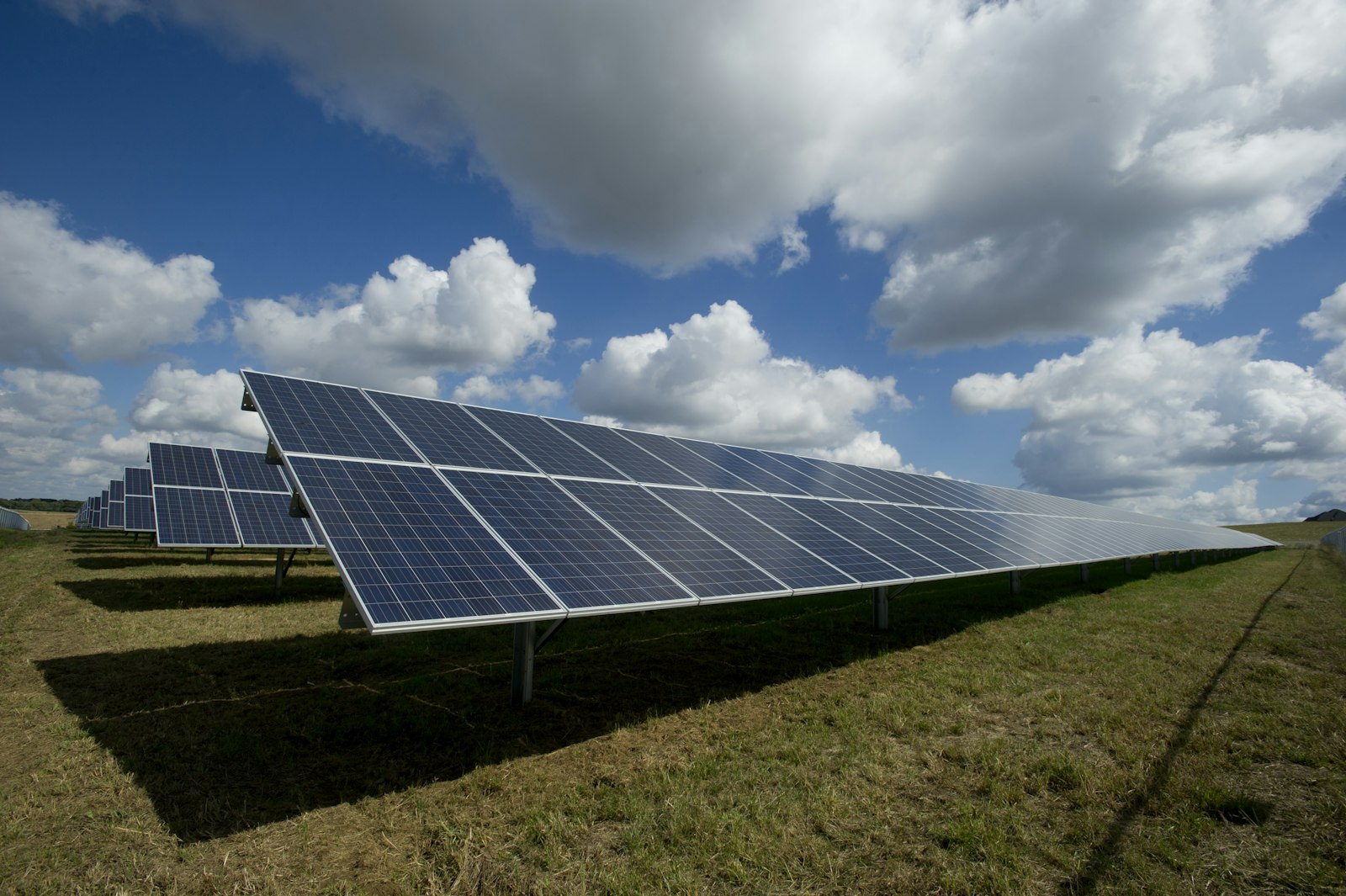
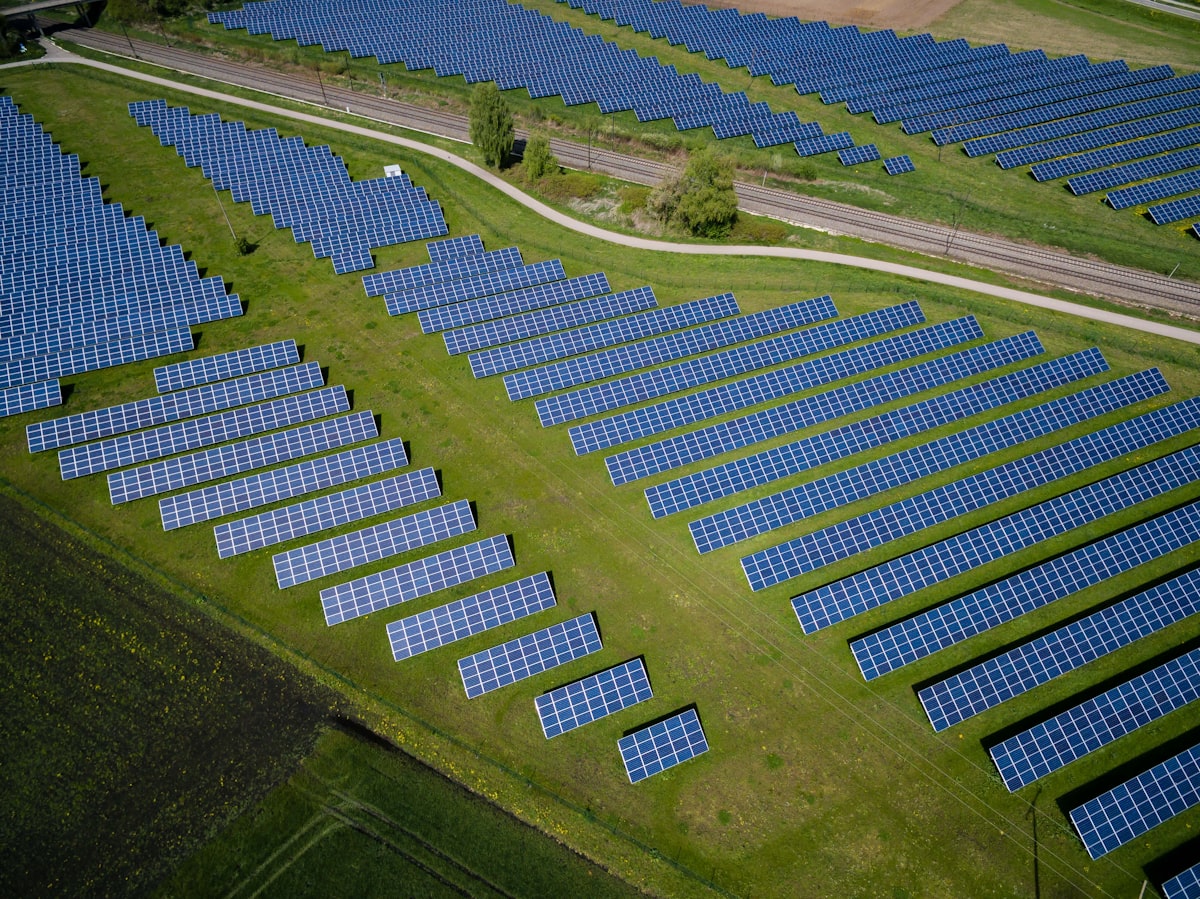
Solar Energy
Solar photovoltaics convert sunlight directly into electricity, and no country has deployed this technology at
China's scale. By the early 2020s China had roughly 800 GW of installed PV capacity — about 40% of the world
total — and has held the global number-one position for consecutive years. The country adds tens of gigawatts of
new solar every year, an amount greater than the entire grid of most nations.
This build-out rests on a domestic manufacturing base that produces most of the world's solar panels, with
companies such as Longi Green Energy and Tongwei leading the global supply chain in wafers, cells and modules.
For investors and manufacturers, solar matters on three levels. First, it delivers some of the cheapest
electricity in history, lowering operating costs for energy-intensive production. Second, a deep domestic supply
chain means panels, inverters and balance-of-system components can be sourced locally at competitive prices.
Third, the sector is a direct beneficiary of national policy, which keeps demand stable and predictable over
multi-year horizons. As grid-scale plants, rooftop systems and utility storage expand together, solar remains the
single largest and most liquid segment of China's green-energy market.
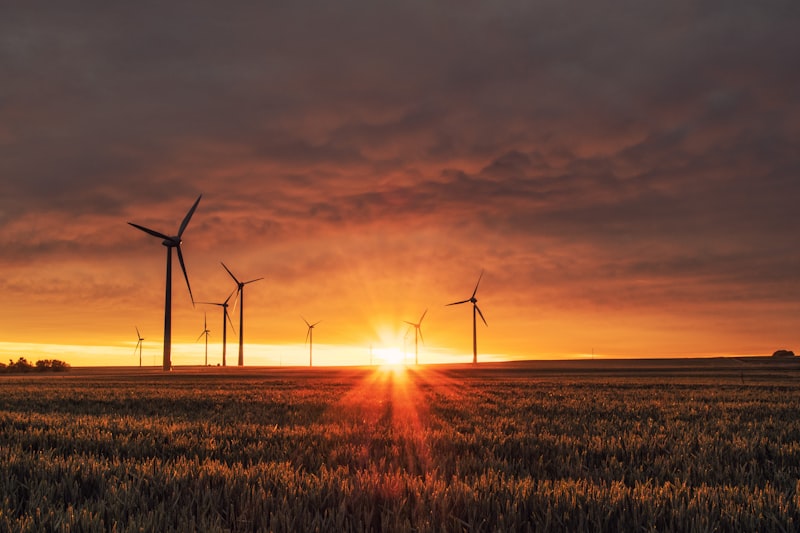
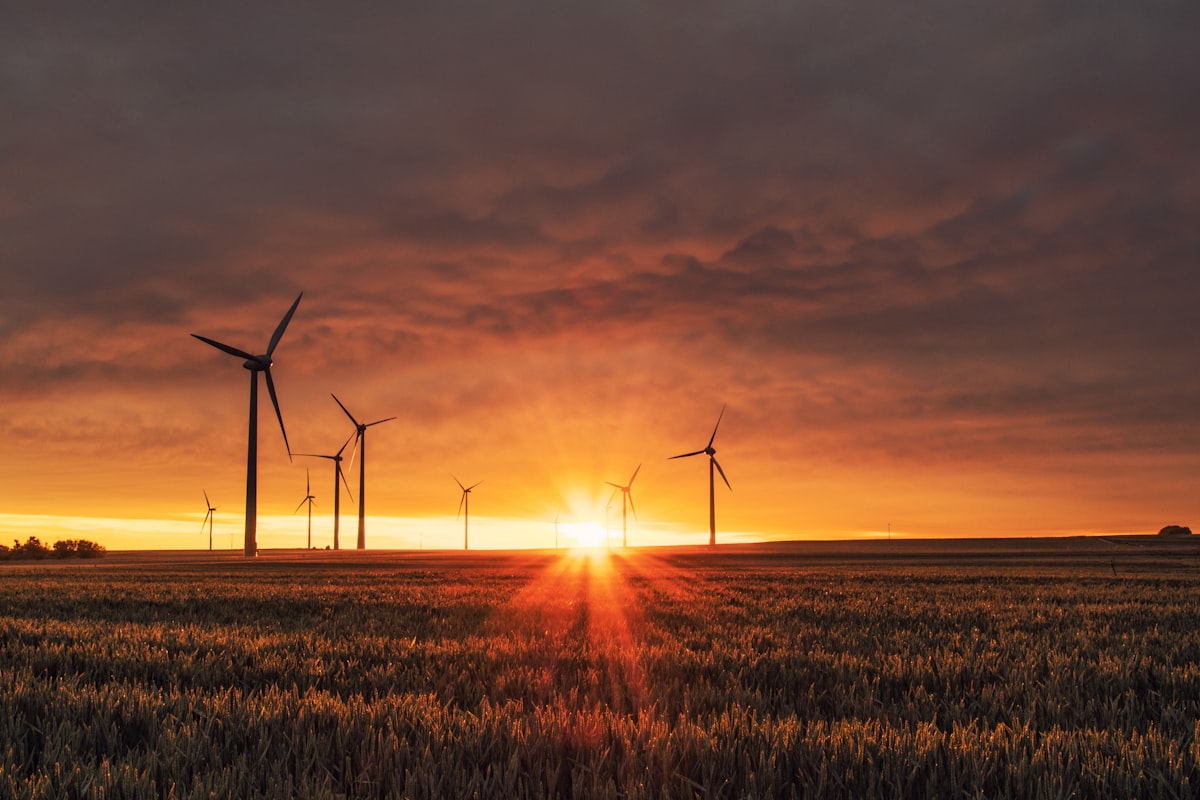
Wind Energy
Wind power turns moving air into electricity through onshore and offshore turbines. China operates roughly
500 GW of installed wind capacity, the largest fleet in the world, and leads globally in both onshore and offshore
wind. Its offshore build-out is especially striking: China has installed more offshore turbines than any other
country, including the giant coastal projects off Jiangsu, Guangdong and Fujian.
Domestic manufacturers such as Goldwind, Envision and Mingyang dominate global turbine production, supplying not
only the home market but also export projects across Asia, Europe and Latin America. For investors, wind offers
several advantages. Onshore wind in resource-rich northern and western provinces now generates power at prices
competitive with, or below, coal. Offshore wind provides a large, predictable source of low-carbon electricity
close to the industrial clusters of the eastern coast, where much of China's manufacturing demand is concentrated.
The supply chain — towers, blades, gearboxes, generators and installation vessels — is deep and mature, giving
equipment makers and project developers stable margins. With capacity targets rising every five-year planning
cycle, wind remains one of the most bankable sectors in China's energy transition.
Hydropower
Hydropower uses falling or flowing water to spin turbines, and it remains the backbone of China's clean-energy
system. The country has roughly 420 GW of installed hydropower capacity — the most in the world — anchored by the
Three Gorges Dam, which at 22.5 GW is the largest power station of any kind on Earth. Beyond Three Gorges, massive
cascade projects on the Yangtze, Jinsha, Lancang and Yellow rivers generate enormous volumes of reliable,
low-carbon electricity while also providing flood control, navigation and water storage.
This baseload character is what makes hydropower uniquely valuable: unlike solar or wind, it can dispatch power on
demand and smooth the variability of renewables. For investors and manufacturers, hydropower supplies some of the
cheapest, most stable electricity in the country, often in the western provinces that host heavy industry and data
centers. It also underpins pumped-storage development and cross-regional ultra-high-voltage transmission that
moves clean power to coastal demand centers. Although the largest dam sites are now mostly built, the operating
fleet, refurbishment market and international contracting business — Chinese firms build dams worldwide — offer
continuing opportunities in a sector that has powered China for decades.

Nuclear Power
Nuclear power generates heat through fission, boiling water to drive steam turbines, and it provides firm,
carbon-free baseload electricity. China operates roughly 57 GW of nuclear capacity — the third-largest fleet in
the world after the United States and France — but its real leadership is in growth: the country has more reactors
under construction than any other nation, as it scales nuclear to meet electricity demand and decarbonization
goals.
The centerpiece is the domestically designed Hualong One ("华龙一号") reactor, a third-generation pressurized
water reactor that China is now exporting to countries such as Pakistan and Argentina and marketing across the
Belt and Road. For investors, nuclear matters because it is the anchor of a stable grid. A nuclear plant runs at
full output around the clock, immune to weather and fuel-price swings, which makes it a hedge against the
intermittency of wind and solar. The industrial opportunity is equally significant: each plant requires thousands
of high-precision components, from pressure vessels and steam generators to control systems and nuclear-grade
steel, supporting a sophisticated supply chain. As China's approval pace accelerates, nuclear is evolving from a
niche source into a core pillar of a low-carbon, high-reliability power system.

Tidal Energy
Tidal energy captures the predictable rise and fall of ocean tides to generate electricity. Although the global
tidal industry is still young, China has been exploring the technology for decades and ranks among the world's
frontrunners. Its best-known project is the Jiangxia Tidal Power Station in Zhejiang province, one of the world's
long-running tidal plants, which has generated power since the 1980s and serves as a living laboratory for
barrage, turbine and marine-corrosion technologies.
Chinese researchers and companies are also testing newer approaches, including floating tidal turbines and
multi-turbine arrays along the coastal provinces, where strong tidal currents offer a dependable resource. The key
appeal of tidal energy is predictability: unlike solar or wind, tides follow the moon and can be forecast years in
advance, making them a stable complement to the renewable mix. For investors, tidal represents an early-stage,
high-upside segment. The near-term opportunity is more in engineering, turbines and marine infrastructure than in
immediate power sales, but the strategic value is real — as coastal industrial zones seek firm low-carbon power and
as Chinese marine engineering expertise transfers to export markets. Tidal is the smallest of China's nine sources
today, yet it signals the breadth of the country's clean-energy ambition.

Biomass Energy
Biomass power burns or gasifies organic material — agricultural residue, forestry waste and municipal organic
waste — to produce electricity and heat. China is among the world leaders in installed biomass generation
capacity, with thousands of plants concentrated in agricultural provinces. Much of the fuel comes from crop straw,
rice husks, corn stalks and forestry residues that would otherwise be burned in fields or left to decay, so the
sector doubles as a waste-management and air-quality solution.
The feed-in-tariff era of the 2010s built out the industry, and today the focus is shifting from subsidies to
efficiency, co-generation and cleaner conversion technologies. For investors and manufacturers, biomass offers a
distinct value proposition: it is a dispatchable, baseload-adjacent renewable that can run when the sun is not
shining and the wind is not blowing, helping balance the grid. It also turns a rural cost — disposing of
agricultural waste — into a revenue stream, supporting rural employment and incomes. The equipment supply chain,
from boilers and gasifiers to feedstock handling systems, is domestically mature and increasingly exported. As
China tightens rules on open-field burning and builds a circular low-carbon economy, biomass remains a steady,
policy-supported niche within the broader energy transition.

Geothermal Energy
Geothermal energy taps heat stored beneath the Earth's surface, either to generate electricity or, more commonly,
to provide heating and cooling directly. China is the world leader in geothermal direct use, with the largest
installed area of geothermal heating of any country — a network that warms homes, greenhouses, fish farms and
industrial facilities, particularly in northern provinces such as Hebei and Tianjin and in geothermal-rich regions
like Xizang and Yunnan.
Shallow geothermal energy, using ground-source heat pumps, is expanding rapidly as cities replace coal-fired winter
heating with cleaner alternatives. This is where the investor story lies: district heating and heat-pump systems
are less visible than solar farms, but they address one of China's hardest decarbonization problems — the
coal-heavy winter heating load of the north. Geothermal systems run continuously, need little fuel and have low
operating costs once drilled, offering long, stable revenue streams. The supply chain — drilling services, heat
pumps, pipe networks and engineering — is developing quickly, supported by government targets for clean heating.
For manufacturers and investors alike, geothermal represents a steady, infrastructure-style opportunity in energy
efficiency and building decarbonization that complements the more famous wind and solar build-outs.

Hydrogen Energy
Hydrogen is a clean energy carrier that can store and transport energy, power industrial processes and fuel
vehicles. China is the world's largest producer of hydrogen, manufacturing tens of millions of tonnes each year,
mostly for refining and chemicals. The strategic shift now under way is toward green hydrogen — made by
electrolyzing water with renewable electricity — and China is scaling up electrolyzer manufacturing, hydrogen
refueling stations and fuel-cell vehicles faster than almost any other country.
The fuel-cell truck and bus market, concentrated in industrial provinces, is among the world's largest. For
investors and manufacturers, hydrogen's importance is structural rather than immediate. It is the leading candidate
to decarbonize the sectors electricity cannot easily reach: steelmaking, cement, long-haul trucking, shipping and
seasonal energy storage. China's advantage is cost and scale — its electrolyzer and fuel-cell supply chains are
already driving global prices down, much as they did for solar panels and batteries. Policy support is growing
through demonstration city clusters and national hydrogen strategies. While green hydrogen is still more expensive
than grey hydrogen today, the trajectory is clear, and the companies that master electrolysis, storage and fuel
cells now are positioning for a market expected to expand dramatically over the coming decade.

Energy Storage
Energy storage captures electricity for later use, and it is the technology that makes a renewable-heavy grid
reliable. China leads the world in new energy storage — battery systems, primarily lithium-ion — with the largest
installed capacity of any country, and it also operates the world's largest pumped-storage hydropower fleet, which
stores energy by pumping water uphill and releasing it through turbines. The country is installing storage at an
extraordinary pace, driven by falling battery costs and a booming domestic battery industry led by companies like
CATL and BYD.
For investors and manufacturers, energy storage is arguably the most consequential part of the transition. It
smooths the peaks and troughs of solar and wind, prevents curtailment, stabilizes frequency and voltage, and
defers expensive grid upgrades — making the entire energy system cheaper and more dependable. It also creates
enormous demand for cells, inverters, power-conversion systems and software, all of which China produces at global
scale. As electric vehicles and renewable generation grow together, storage links the two, absorbing surplus power
and feeding it back when demand peaks. With mandatory storage requirements attached to many new renewable projects,
the sector offers a rare combination of explosive growth and policy-guaranteed demand.