Tesla Gigafactory Shanghai
How China turned Tesla from production-constrained EV pioneer into a global manufacturing force
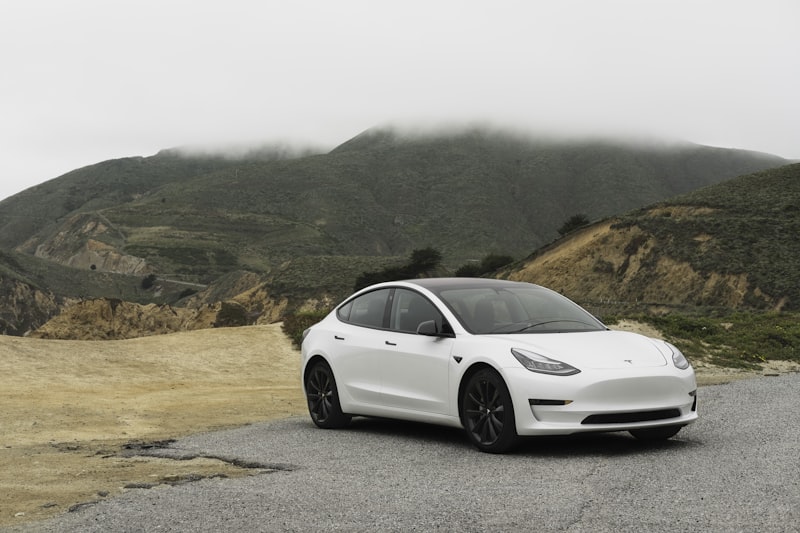
Executive Summary
Tesla's China story is not mainly a recent electric-vehicle market-share story. It is a landmark investment case: a foreign manufacturer entered China at a moment when the country's auto industry was shifting from joint-venture gasoline cars toward electric mobility, then received a level of local industrial coordination that allowed a project many markets would treat as impossible to become real at speed. The Shanghai Gigafactory did not only give Tesla another factory. It changed Tesla's cost structure, production learning curve, supply chain, export footprint and global credibility.
Before China, Tesla was a high-profile but production-constrained American electric-vehicle company. It had proved that EVs could be desirable through the Roadster, Model S, Model X and Model 3, but it still faced the classic problem of a new automaker: scaling manufacturing without destroying quality, capital efficiency or brand trust. The company had demand and attention, but manufacturing scale remained the strategic bottleneck. Fremont was important, but it was not enough to turn Tesla into a mass global manufacturer.
Before Tesla entered China deeply, China's auto market was already the world's largest, but it was built mostly around gasoline vehicles and joint ventures. Foreign automakers typically operated through joint ventures with Chinese partners. Volkswagen, General Motors, Toyota, Honda, Nissan, BMW, Mercedes-Benz and others had built large China businesses, but the operating model reflected the old era: foreign technology and brand combined with local partners, local manufacturing and state-managed market access. Electric vehicles existed, and Chinese policy was pushing new-energy vehicles, but the category had not yet reached the mass consumer tipping point.
Tesla's Shanghai Gigafactory broke several patterns. It was Tesla's first overseas vehicle factory and one of the clearest examples of China using industrial policy, land, permitting, finance, infrastructure and supply-chain depth to accelerate a strategically important foreign investment. The project moved from agreement and land preparation to production with unusual speed. A factory that might have taken years to negotiate and execute elsewhere became a symbol of what China could do when a project matched national industrial priorities.
The result changed both Tesla and China. For Tesla, Shanghai became a manufacturing engine, a cost-reduction platform, a supply-chain localization center and an export hub. It helped Tesla produce Model 3 and Model Y at scale, lower prices, improve margins and serve Asia-Pacific and other markets. For China, Tesla validated the premium EV category, pushed local suppliers to higher standards, forced domestic EV brands to compete harder and accelerated consumer belief that electric cars could be mainstream products rather than policy experiments.
This case is especially important for foreign investors because Tesla did not win China by treating it as only a sales market. It treated China as an operating system: factory, supplier base, engineering feedback loop, logistics platform, consumer market, policy environment and export base. That is the difference between selling into China and building with China.
The deeper lesson is not that every foreign company can receive Tesla-level support. Tesla was special because it aligned with China's strategic goals: new-energy vehicles, advanced manufacturing, supply-chain upgrading, local employment, industrial clustering and global competitiveness. But the principle still matters. When a foreign investment helps China upgrade a priority sector, creates local capacity and brings real technology or brand value, China can make execution faster than outsiders expect.
1. Before Tesla: China's Auto Market Before the EV Breakout
The gasoline joint-venture era
For decades, China's passenger-car market was shaped by joint ventures. Foreign automakers entered through partnerships with Chinese state-owned or local companies. This model helped China gain manufacturing know-how, management systems, supplier development and modern vehicle platforms while allowing foreign brands to access a huge market. It was a practical compromise for the gasoline-car era.
The joint-venture model produced enormous scale. Volkswagen and General Motors became deeply embedded in China. Japanese brands built strong reputations for reliability. German luxury brands dominated premium aspiration. Chinese consumers learned to trust foreign car technology through this system. But the model also had limits. Chinese companies often remained dependent on foreign engines, platforms and brand power. Domestic passenger-car brands improved, but the strongest premium positions still belonged to foreign names.
This old structure matters because Tesla's Shanghai project represented a different kind of foreign entry. Tesla did not arrive as another gasoline JV brand. It arrived as an EV-first company at a moment when China wanted to leapfrog the internal-combustion hierarchy. The strategic question was no longer how China could catch up in engines. It was how China could lead in batteries, electric drivetrains, software, smart manufacturing and EV supply chains.
Early new-energy policy and market uncertainty
China had been encouraging new-energy vehicles before Tesla's Shanghai factory, but early adoption was uneven. Policy support, subsidies, license-plate advantages and local pilot programs helped create demand. Yet many consumers still doubted EV practicality. Battery range, charging, resale value, safety, price and brand trust were real concerns. Some early domestic EVs were seen as compliance vehicles or subsidy-driven products rather than genuinely desirable cars.
This gave Tesla an unusual role. Tesla made EVs aspirational. A Model S or Model X did not look like a compromise. It looked like a technology product and a performance car. Even before local production, imported Teslas created attention among Chinese entrepreneurs, technology workers, wealthy urban consumers and early adopters. Tesla showed that electric cars could be fast, premium, software-driven and emotionally exciting.
However, imported vehicles were expensive. Tariffs, shipping, currency, limited service coverage and supply constraints made Tesla a niche premium product. The brand had demand, but the operating model could not unlock mass scale. Local production was necessary if Tesla wanted to compete seriously in China.
China's strategic need for a benchmark
China did not only need more EV brands. It needed a benchmark. Domestic EV companies were developing, but the market benefited from a foreign leader that could raise consumer expectations and supplier standards. Tesla's arrival helped create pressure. It told Chinese automakers: the future EV competitor is not a small low-speed electric car; it is a fast, software-led, premium product with global brand power.
This pressure was useful for China. Industrial policy works better when domestic companies face demanding competition. A protected market can become complacent. A market with Tesla inside it forces learning. Chinese companies had to improve product design, battery integration, software experience, charging, manufacturing efficiency and brand storytelling.
That is one reason the Tesla project made sense for China. It was not only about foreign investment dollars. It was about ecosystem acceleration.
2. Tesla Before China: Desire Without Enough Manufacturing Scale
Tesla had proved demand
Before Shanghai, Tesla had already proved that EVs could create desire. The Roadster showed performance. Model S showed premium sedan appeal. Model X added SUV visibility. Model 3 created a mass-market ambition. Tesla had a founder-led technology story, strong media attention, over-the-air software updates, Supercharger infrastructure and a direct-sales model that felt different from traditional dealerships.
This mattered in China because Chinese consumers are receptive to technology narratives when the product feels advanced. Tesla was not just a car brand. It was seen as a Silicon Valley technology company that happened to make cars. That positioned Tesla differently from legacy automakers, whose EV efforts often looked defensive.
Yet demand without production is not enough. A car company must build at quality, at volume and at competitive cost. Tesla's early manufacturing struggles showed how difficult this is. Model 3 ramp-up in the United States was painful. The company needed a second manufacturing system that could scale faster and lower cost.
Fremont could not solve the world
Tesla's Fremont factory was important, but it carried inherited layout constraints and U.S. cost structure challenges. Building every global car from California would limit Tesla's ability to serve large overseas markets efficiently. Vehicles are heavy, regulated, tariff-sensitive and logistics-intensive. Local production in major markets is usually necessary for serious scale.
China was the obvious market, but also the difficult one. It was huge, policy-driven, competitive and operationally demanding. Entering China through import alone would leave Tesla exposed to price disadvantages and supply delays. A local factory would solve tariff, logistics and scale problems, but it required trust from Chinese authorities and a level of execution Tesla had not yet proven internationally.
This is why Shanghai became a test of Tesla as a global manufacturer. If Tesla could build quickly in China, localize supply and ramp output, it would no longer be only a California EV story. It would become a global industrial company.
Capital pressure and the importance of local financing
Tesla's early growth was capital-intensive. Vehicle plants require land, equipment, tooling, suppliers, working capital, logistics and skilled labor. A company can have high market enthusiasm and still struggle with cash timing. Shanghai mattered because local financing and local industrial support reduced the burden of building a massive overseas production base.
The Shanghai project showed how local government, banks, land arrangements and industrial priorities can combine to make a foreign investment feasible. This was not charity. China wanted advanced manufacturing, EV leadership and supplier upgrading. Tesla wanted speed, scale and cost efficiency. The interests overlapped.
For foreign investors, this is central: China support is strongest when the project is not merely extracting market access, but adding capacity that local policy wants.
3. Why Shanghai Was the Right Location
Industrial depth
Shanghai and the Yangtze River Delta offered industrial depth that few regions could match. Automotive suppliers, electronics manufacturers, ports, logistics networks, skilled workers, engineers, universities, local government capacity and financial institutions were all present. A vehicle factory needs more than land. It needs an ecosystem around it.
The Yangtze River Delta is one of the world's most sophisticated manufacturing regions. It can support precision components, automation equipment, battery supply chains, electronics, plastics, stamping, logistics and quality systems. For Tesla, this meant local suppliers could be developed quickly and scaled with the factory.
Shanghai also had the administrative capability to coordinate a complex project. Permitting, utilities, road access, customs, financing and labor all require execution. A region that cannot coordinate these pieces creates delays. Shanghai's strength was not only policy willingness; it was operational competence.
Market access and premium consumer base
Shanghai was also a strong consumer market. It had affluent households, technology workers, entrepreneurs, finance professionals, international exposure and early adopters. Tesla cars fit the city's image: advanced, global, premium and green. A factory near a major early-adopter market created symbolic and practical advantages.
A Tesla produced in Shanghai could be shown to Chinese consumers as local, accessible and serious. The brand was no longer a distant import. It had a Chinese manufacturing home.
Shanghai's role as a national signal city also mattered. If Shanghai accepted Tesla, other cities paid attention. The factory became a story not only for auto buyers, but for officials, suppliers, investors and entrepreneurs across China.
Export and logistics advantages
Shanghai's port and logistics infrastructure made it suitable as an export hub. A vehicle plant serving only China would be valuable; a plant serving China and other markets is more valuable. As Shanghai production scaled, Tesla could use the factory to supply regions beyond mainland China, improving global flexibility.
This turned China into more than a sales market. It became a global production node. For Tesla, that meant risk diversification and cost leverage. For China, it meant that a foreign-invested factory inside China could contribute to exports and global EV supply.
4. The Shanghai Gigafactory as an Execution Case
Speed as strategic advantage
The speed of the Shanghai Gigafactory became part of its legend. From agreement to land preparation, construction, equipment installation and production, the project moved at a pace that surprised many observers. In industrial investment, speed is not cosmetic. It changes economics. Faster construction means earlier revenue, lower uncertainty, faster supplier learning and stronger investor confidence.
Tesla needed that speed. The company was under pressure to prove Model 3 scale, enter China locally and show that it could build factories outside the United States. Shanghai provided a visible answer.
China also benefited from speed. A fast project signaled that the country could still execute major advanced-manufacturing investments at world-class pace. It showed other foreign investors that China was not only a market, but a place where industrial projects could move quickly when aligned with policy.
Local government coordination
Large factories require coordinated government action: land use, environmental review, utilities, tax matters, customs, roads, financing, construction permits and workforce support. The Tesla project demonstrated how local government can act as an industrial organizer. This does not mean every step was simple, but it means the project had a clear priority status.
For foreign investors, the lesson is that government relationships in China are not only regulatory. They can be operational. A supportive local government can solve coordination problems that would otherwise slow investment.
But this support depends on project quality. Tesla brought brand power, technology, manufacturing capability, local employment and ecosystem value. It was not a generic factory. It matched the region's development goals.
Wholly foreign-owned significance
Tesla's Shanghai factory was also significant because it operated under a more open ownership model than the old joint-venture pattern. This showed China's willingness to liberalize in strategic sectors when the timing and policy goals aligned. It gave Tesla more control over manufacturing, brand and operations than a traditional JV might have allowed.
Control mattered to Tesla because its product system integrates hardware, software, manufacturing, charging and direct consumer experience. A fragmented JV structure could have slowed decisions. Shanghai allowed Tesla to implement its own system more directly while still embedding into China's supplier and policy environment.
This balance is the core of the case: Tesla kept operational control, while China gained industrial upgrading and local ecosystem development.
5. Local Supply Chain: The Real Engine
Localization reduced cost and increased flexibility
The Shanghai factory's power came not only from assembly, but from localization. As Tesla sourced more parts locally, costs fell, lead times improved and supply flexibility increased. Local batteries, components, interiors, electronics and manufacturing services helped Tesla produce vehicles more competitively.
This cost reduction allowed Tesla to adjust prices in China and compete across a wider consumer base. Imported Tesla vehicles were premium and expensive. Locally produced Model 3 and Model Y vehicles could reach more buyers. Price movement was not just marketing; it reflected structural cost changes from local production.
For a manufacturer, local supply chain is often the difference between symbolic presence and real competitiveness. Tesla became more competitive in China because it built inside the Chinese industrial system.
Supplier upgrading and learning
Tesla also affected Chinese suppliers. The company is demanding on quality, speed, engineering changes and cost. Suppliers that meet Tesla standards gain capability and credibility. This can help them win other global business. The Tesla effect therefore spread beyond Tesla's own factory.
This is one reason China welcomed the project. A strong foreign manufacturer can raise the level of the local supplier base. Domestic EV brands also benefit indirectly because the ecosystem becomes more sophisticated. Tooling, battery systems, electronics, casting, stamping, interiors and software-adjacent components all improve when demanding customers push suppliers.
There is a strategic irony here. Tesla's local supply chain helped Tesla compete, but it also helped the broader Chinese EV industry become stronger. This is common in China. A foreign brand's investment can accelerate the local competitors that later challenge it.
CATL, batteries and the battery ecosystem
Batteries are central to EV competitiveness. China's battery ecosystem, including major players such as CATL and others, gave Tesla access to one of the world's deepest battery supply chains. Battery cost, chemistry, availability and integration all influence vehicle pricing and range.
Tesla's China strategy became stronger because it could work with local battery suppliers and adapt to different chemistries and cost structures. LFP batteries, for example, became important for more affordable standard-range vehicles. This helped Tesla compete in price-sensitive segments without fully abandoning performance and brand appeal.
China's battery ecosystem was not a passive supplier base. It was a strategic asset. Any foreign EV company entering China has to understand that batteries, not only vehicle assembly, define competitiveness.
6. Consumer Transformation: From Imported Symbol to Local Mass Premium
Imported Tesla as technology status
Before local production, Tesla was an imported technology status object in China. It appealed to entrepreneurs, technology workers, wealthy urban families and consumers who wanted to be associated with the future. The cars were expensive, but that expense reinforced exclusivity.
The imported phase was useful because it built brand desire before mass availability. Consumers saw Tesla as advanced and different. The brand's software interface, acceleration, minimalist interior and founder-driven story made it distinct from legacy luxury cars.
However, imported status could not be the final model. A niche import can build desire, but local production builds scale.
Shanghai-made Tesla as accessible premium
Once Shanghai production began, Tesla became more accessible. Local manufacturing reduced costs and improved delivery. Model 3 and Model Y could compete with premium gasoline vehicles and domestic EVs in a more direct way. Tesla moved from symbolic import to practical purchase option.
This shift changed consumer psychology. Buying Tesla was no longer only a statement of wealth or novelty. It became a rational consideration for urban families comparing fuel cost, license-plate policy, technology, charging, brand and resale value.
The Shanghai-made Tesla therefore bridged aspiration and rationality. It remained premium enough to signal status, but local production made it economically plausible for a larger group.
Model Y and family adoption
Model Y became especially important because Chinese consumers often prefer SUVs and family-friendly vehicles. A sedan can build brand identity, but an SUV can unlock household demand. Model Y fit China's family upgrade logic: roomier, practical, premium, electric and technologically modern.
Family adoption matters because it changes EVs from early-adopter toys into mainstream household cars. A family buyer asks different questions: safety, space, service, charging, price, durability and resale. Tesla's ability to win these buyers in China showed that EVs were moving beyond novelty.
This helped the broader market. When more families considered Tesla, domestic EV brands had to improve their own family products. The competition pushed the entire category forward.
7. Tesla as a Catalyst for China's EV Ecosystem
Raising the benchmark
Tesla raised the benchmark for Chinese EVs. Before Tesla's local production, some consumers associated EVs with subsidies, small city cars or compliance vehicles. Tesla made EVs aspirational, fast, software-led and premium. This changed what consumers expected.
Domestic brands had to respond. BYD, NIO, Xpeng, Li Auto and others developed different strategies, but all operated in a market where Tesla had reset expectations. Battery range, infotainment, driver-assistance features, charging, interior design, direct sales, online ordering and OTA updates became more important.
This competitive pressure helped China. It accelerated the transition from policy-driven EV adoption to product-driven EV adoption.
The local champions became stronger
Tesla did not enter a weak market and keep it weak. China produced strong local champions. BYD built scale and battery integration. NIO developed premium service and battery-swap identity. Xpeng pushed smart-driving and technology positioning. Li Auto focused on family SUVs and range-extended products. Many other brands attacked price, design, city use, luxury, exports or software.
This means Tesla's China story is not a simple foreign victory. It is a mutual acceleration story. Tesla benefited from China, and Chinese EV companies benefited from the pressure and ecosystem around Tesla.
For foreign investors, this is important. China can make a foreign company stronger, but it can also make the local competitive field stronger. The market rewards speed, but it does not guarantee permanent advantage.
Consumer education and charging confidence
Tesla also helped educate consumers about charging, range, software updates and EV ownership. Charging infrastructure and consumer confidence are linked. A buyer who sees more Teslas on the road becomes more comfortable with the idea that EV ownership is practical.
Tesla's Supercharger network and broader charging ecosystem helped reduce anxiety among early adopters. At the same time, China's public and private charging infrastructure expanded rapidly. The combination made EVs more normal.
Consumer education is often overlooked in investment cases. A factory does not only produce cars. It produces proof. Every delivered Tesla became a rolling advertisement for EV viability.
8. The Export Hub Logic
Shanghai as global production node
Shanghai's role as an export hub changed the meaning of the investment. A local factory built only for Chinese demand would already be significant. A factory that can also supply other markets becomes a global node. This gives Tesla production flexibility and gives China export value.
Exports matter because vehicle demand can fluctuate by region. A factory with export capability can balance output across markets. It can serve Asia-Pacific, Europe or other regions depending on demand, logistics and policy conditions. This makes Shanghai more strategically valuable than a single-market plant.
For China, exports also support the country's goal of moving up the manufacturing value chain. Exporting high-value EVs from a foreign-invested factory reinforces China's role as a global advanced-manufacturing base.
Cost, scale and learning
The export hub model also improves learning. A high-volume factory learns faster. Workers, suppliers, quality systems and engineering teams improve through repetition. More output spreads fixed costs. Supplier volume increases. Process improvements compound.
Tesla's Shanghai plant became known for efficiency because scale and learning reinforced each other. Manufacturing is a learning business. The more disciplined the factory, the more every cycle can reduce waste, improve quality and increase speed.
This is the part of the story that matters most for industrial investors. China's advantage is not only cheap labor. It is speed of learning inside a dense manufacturing ecosystem.
Global risk and dependence
However, export hub success also creates dependence. If a major share of production or supply chain is tied to China, the company becomes exposed to geopolitics, tariffs, shipping disruptions, local policy changes and market sentiment. Tesla's China success therefore created both strength and risk.
This is normal in China strategy. The larger China becomes in a company's operations, the more the company must manage China as a core strategic system, not a peripheral market.
9. Before-and-After Financial Logic
Before China: high valuation, limited manufacturing proof
Before Shanghai scaled, Tesla's valuation and brand story were powerful, but skeptics questioned whether the company could manufacture profitably at global scale. The company had innovation credibility, but manufacturing credibility was still contested.
China changed that debate. Shanghai showed that Tesla could build a factory quickly, localize supply and produce at scale outside the United States. It gave investors a concrete example of execution, not only ambition.
This manufacturing proof affected financial perception. A company that can build and operate a high-volume plant in China looks different from a company dependent on one difficult U.S. production base.
After China: cost structure and margin platform
Shanghai helped Tesla's cost structure. Local sourcing, manufacturing efficiency, supplier competition and scale improved the economics of Model 3 and Model Y. That gave Tesla room to lower prices when needed while still supporting volume.
Price cuts are often discussed only as competitive tactics, but they also reflect structural capability. A company with lower production cost can use pricing aggressively. A company without cost advantage cannot.
China therefore became part of Tesla's global pricing power. The factory did not merely serve local demand; it changed what Tesla could afford to do.
Capital efficiency as the hidden metric
The Shanghai project is also a capital-efficiency case. The speed of construction and ramp improved the relationship between investment and output. In manufacturing, a plant that takes too long to generate production consumes capital without creating revenue. A fast ramp reduces this drag.
For foreign investors, capital efficiency may be the most important lesson. China can make large projects economically attractive when local government coordination, supplier depth and market demand reduce time-to-output. But the project must be real, aligned and execution-ready.
10. Policy Alignment: Why Tesla Received Support
New-energy vehicles were a national priority
Tesla aligned with China's new-energy vehicle strategy. China wanted to reduce oil dependence, lower urban pollution, build domestic battery and EV industries, and compete in the next generation of automobiles. Tesla brought a globally recognized EV brand and manufacturing system into that priority sector.
This alignment explains the support. It was not simply favoritism toward a foreign company. It was industrial strategy. Tesla could help move the market, suppliers and consumers faster toward EV adoption.
Foreign investors should study this carefully. China support tends to be strongest where the investment helps local strategic goals. A project that brings advanced manufacturing, technology upgrading, exports, employment, local supplier development or consumer-category transformation has a better chance of receiving serious support.
Competition as policy tool
China also used Tesla as a competitive stimulus. Domestic EV companies had to improve when Tesla localized. This is a sophisticated policy logic: bring in a strong foreign player not to protect it, but to force the ecosystem to upgrade.
The result was uncomfortable for some domestic companies, but beneficial for the sector. Weak players were exposed. Strong players improved. Consumers gained better products. Suppliers gained demanding customers. The EV category became more credible.
This is why Tesla's China case should not be read as China choosing foreign over domestic. It was China using foreign strength to accelerate domestic capability.
Local benefits and national goals
Shanghai benefited through jobs, investment, tax base, supplier clustering, export activity and global visibility. National policy benefited through EV acceleration and industrial upgrading. Tesla benefited through speed, scale and cost. The project worked because benefits existed at several levels.
This multi-level benefit structure is what foreign investors should aim for. If a project benefits only the foreign company, local support will be limited. If it also benefits city, province, suppliers, workers and national strategy, execution becomes much easier.
11. Operational Risks and Tensions
Quality and service expectations
Tesla's rapid China growth also brought quality and service scrutiny. Chinese consumers are demanding, vocal and digitally connected. Complaints can spread quickly. A foreign brand with premium positioning must manage delivery, service, repair, software, communication and public relations carefully.
The more mainstream Tesla became, the more ordinary consumers judged it like a normal car company. Early adopters may forgive issues. Family buyers are less forgiving. This is part of the transition from niche technology brand to mass automaker.
Price changes and consumer trust
Tesla's price adjustments created both volume and tension. Lower prices can expand demand, but they can upset recent buyers and pressure resale values. In China, where consumers compare prices intensely, pricing strategy must be handled carefully.
The ability to cut prices is a cost advantage. But using that ability too aggressively can weaken premium perception. Tesla has to balance volume, margin, brand value and customer trust.
Local competition became world-class
China's EV competition became far stronger after Tesla's entry. BYD's scale, domestic brands' speed and new product cycles put pressure on Tesla. Local companies can move fast, launch models frequently, adapt interiors to Chinese family needs and price aggressively.
This means Tesla's China advantage cannot rely forever on being the EV pioneer. It must keep improving product, software, local features, service, charging and manufacturing efficiency. China is a learning market, but competitors learn too.
Geopolitical and supply-chain risk
Tesla's deep China role creates geopolitical risk. U.S.-China tensions, data concerns, tariffs, export controls, political narratives and national security debates can all affect perception and operations. A foreign company with critical manufacturing in China must manage both business and policy risk.
This does not erase the value of China. It means China strategy must be governed at board level, not treated as an ordinary regional sales plan.
12. What Tesla Changed Inside China
EVs became more desirable
Tesla helped make EVs desirable in China. It showed that electric cars could be fast, premium, minimalist and software-driven. This changed consumer imagination. EVs were no longer only subsidy products or environmental statements. They could be objects of desire.
Desire matters because it moves markets faster than policy alone. Subsidies can create purchases, but desire creates word of mouth, comparison, aspiration and voluntary adoption.
Suppliers moved up the value chain
Tesla's supplier requirements pushed local companies to improve. Meeting Tesla standards can require better process control, faster engineering response, quality documentation and cost discipline. Suppliers that succeed become more competitive globally.
This is how one factory can influence an industrial cluster. The value is not only the cars leaving the plant, but the capability created around it.
Domestic brands gained a sharper target
Tesla gave domestic brands a clear target. They could benchmark acceleration, software, direct sales, charging, interior minimalism, pricing and manufacturing efficiency. Some copied Tesla. Others differentiated away from it. Both responses helped the market mature.
Chinese EV brands became stronger partly because Tesla made the competition more serious. This is the paradox of successful foreign investment in China: it can help build the competitors that later pressure the investor.
13. What China Changed Inside Tesla
Tesla became a global manufacturer
Shanghai helped Tesla become a more credible global manufacturer. It proved the company could build outside the United States, work with local government, manage local suppliers and ramp production in a different regulatory and cultural environment. That changed how investors, suppliers and competitors viewed Tesla.
The company moved from startup-like manufacturing struggle toward global industrial scale. Shanghai was not the only factor, but it was one of the most visible.
Tesla learned cost discipline
China forced cost discipline. Local competitors, supplier density and price-sensitive consumers require constant attention to cost. Tesla could not rely only on premium image. It had to produce efficiently enough to compete.
This cost learning affected global strategy. A company that learns to manufacture competitively in China can apply some lessons elsewhere, even if every region is different.
Tesla became more exposed to China
Success created dependence. China became important to Tesla's production, sales, supplier base and global exports. This gave Tesla strength, but also made China a central risk variable. The company now had to manage local policy, competition, public sentiment, supply chain and geopolitics at a much deeper level.
This is the tradeoff of China scale. The market can transform a company, but it also becomes part of the company's identity and risk profile.
14. Why This Investment Was "Impossible" Elsewhere
Speed of land, permits and construction
In many countries, a major auto factory faces years of land negotiation, permitting, litigation, infrastructure delays and political debate. Shanghai compressed much of that process because the project was aligned with local and national priorities. This does not mean rules did not exist. It means coordination worked.
For Tesla, that speed was decisive. A slow overseas factory would have drained capital and delayed China localization. A fast factory created immediate strategic value.
Supplier density
Few regions can match China's supplier density. An automaker needs thousands of parts and fast engineering changes. The closer and more capable the supplier base, the faster the factory can improve. China offered this at scale.
Supplier density is one reason manufacturing in China can move quickly. Problems can be solved through local visits, rapid tooling changes, parallel suppliers and competitive quoting. This creates a speed advantage that is hard to replicate.
Market size
China's market size justified the investment. A factory needs demand. China had the world's largest auto market and a policy-backed EV transition. Tesla was not building in a small market hoping demand would appear. It was building inside the central battlefield of global EV adoption.
Market size, supplier density and policy alignment together made the project possible. Remove one of these and the case becomes weaker.
15. Lessons for Foreign Investors
Align with China's strategic priorities
Tesla's first lesson is alignment. The project matched China's priorities in EVs, batteries, advanced manufacturing, exports and industrial upgrading. Foreign investors should ask: what Chinese policy goal does our project help accomplish? If the answer is unclear, support will be limited.
Alignment does not mean giving up commercial goals. It means showing how commercial success also creates local value.
Bring something China wants
Tesla brought brand, technology, manufacturing challenge, consumer demand and supplier pressure. It was not entering China only to take market share. It brought assets China considered useful. Foreign investors need a similar value proposition.
This can be technology, quality systems, global channels, advanced equipment, trusted brands, R&D capability, supply-chain upgrading or category creation. The point is to bring substance.
Build locally, not only sell locally
Tesla's China breakthrough came from building locally. Selling imported vehicles had limits. Manufacturing in Shanghai changed cost, speed and credibility. For many foreign companies, the same principle applies: local operations create advantages that exports cannot.
Local building can mean factory, R&D center, service network, training hub, local content operation or partner ecosystem. The form depends on the sector, but the principle is the same.
Prepare for local competitors to improve
Tesla's China success helped strengthen the EV ecosystem, including competitors. Foreign investors should expect this. China is not a market where local companies remain passive. They learn quickly.
The response is to keep innovating and build deeper moats. Early advantage is temporary if not renewed.
Treat China as a system
The final lesson is to treat China as a system. Tesla's China result came from factory, suppliers, policy, consumers, charging, logistics, exports and brand. Any one piece alone would be insufficient. Foreign companies often fail when they treat China only as sales or only as manufacturing. The strongest strategy integrates both.
16. The Timeline: From Imported Tesla to Shanghai-Made Tesla
Tesla's China transformation is best understood as a sequence of phases, not as one factory announcement. The first phase was symbolic import. In this phase, Tesla was known in China as an expensive, futuristic foreign car. Imported Model S and Model X vehicles appeared in wealthy neighborhoods, technology-company parking lots, entrepreneur circles and premium urban districts. The brand carried a strong future signal, but it was not yet a mass competitor.
The second phase was strategic courtship. Chinese policymakers were already serious about new-energy vehicles, and Tesla was one of the few global brands that made EVs desirable without relying on subsidy logic. The question was whether China could attract Tesla's manufacturing while giving the company enough control to execute its integrated model. This required a departure from the older foreign-auto pattern. Tesla needed speed and control. China needed a benchmark and ecosystem stimulus.
The third phase was Shanghai commitment. The decision to build Gigafactory Shanghai transformed Tesla's China role from seller to industrial participant. The company was no longer only asking Chinese consumers to buy imported cars. It was committing capital, jobs, equipment, local procurement, engineering attention and long-term operational presence. In China, that distinction matters. A brand that builds locally is judged differently from a brand that only sells locally.
The fourth phase was construction proof. Many companies announce factories. Fewer build them quickly. Shanghai's speed became a message to several audiences at once. To Tesla investors, it said the company could scale outside the United States. To Chinese officials, it said the local industrial system could execute a high-profile advanced manufacturing project. To suppliers, it created urgency. To consumers, it made Tesla feel more accessible and permanent.
The fifth phase was local production. Once Model 3 production began, Tesla's China economics changed. The brand could reduce import-related friction, improve delivery timing, localize parts, and price more aggressively. Consumers who had watched Tesla from a distance could now consider it in a more practical way. The car remained aspirational, but it no longer felt as unreachable.
The sixth phase was Model Y acceleration. Model Y fit Chinese family and SUV demand better than a sedan alone. It made Tesla more relevant to households, not just technology enthusiasts. This was important because family adoption is what turns a vehicle category mainstream. When a car enters family purchase discussions, it must satisfy practical criteria: space, safety, charging, service, price and long-term ownership confidence.
The seventh phase was export-hub maturity. Shanghai was not only supplying China. It became part of Tesla's global production allocation. This changed the factory's role from China-local asset to global manufacturing node. It also showed that foreign-invested manufacturing in China could serve the world, not only domestic demand.
The eighth phase is mature competition. Tesla now operates in a China EV market full of strong local competitors. This is the natural outcome of the earlier phases. Tesla helped make the market more serious, and the market produced competitors capable of challenging Tesla. The strategic question is no longer whether Tesla can enter China. It is whether Tesla can keep renewing its advantage in a market that learned from it.
This timeline matters because it prevents a shallow reading. Tesla did not simply "open a factory." It moved through brand desire, policy alignment, industrial commitment, production proof, mass-premium adoption, export integration and mature competition. Each phase created a different kind of value and a different kind of risk.
17. The Local Government Role: What Shanghai Actually Contributed
Shanghai's contribution to Tesla was not only land. It was coordination. Large manufacturing projects fail or slow down when land, utilities, roads, financing, customs, construction, environmental review, hiring and supplier development move on separate clocks. Shanghai's advantage was the ability to put these pieces into a coordinated industrial project.
The first contribution was speed of administrative process. A factory cannot begin without approvals, site preparation and infrastructure. Every delay creates cost and uncertainty. Shanghai's ability to move the project quickly reduced Tesla's execution risk. This was especially valuable because Tesla was still proving its manufacturing scalability to global investors.
The second contribution was industrial credibility. When a top-tier Chinese city commits to a foreign project, suppliers, banks, contractors and local institutions take the project seriously. This reduces friction. Suppliers are more willing to invest. Banks are more willing to support. Local talent is more willing to join. The project gains an ecosystem before the first vehicle leaves the line.
The third contribution was financial facilitation. Major factories require large capital flows. Local banking support and project finance can change the feasibility of an investment. Tesla's Shanghai project benefited from a local environment that understood the strategic importance of the factory. Financing was not simply a private transaction; it was part of a larger industrial-development logic.
The fourth contribution was infrastructure readiness. Shanghai already had ports, roads, industrial zones, utilities, logistics providers, skilled labor pools and administrative experience. This matters because a car factory is a system. If one piece is weak, output suffers. A region with mature infrastructure lets the company focus more on manufacturing ramp and less on basic setup.
The fifth contribution was signaling. The Shanghai factory told the world that China was open to a high-profile wholly foreign-owned EV manufacturing project. This mattered at a time when many foreign companies were debating China's market access, policy direction and investment climate. Tesla became a proof point that strategic projects could still receive serious support.
The sixth contribution was local ecosystem mobilization. Suppliers do not upgrade automatically. They need visibility into demand, technical requirements and long-term opportunity. Tesla's project created that visibility. Shanghai and surrounding regions could position themselves as part of the EV supply chain, attracting more investment and specialization.
For foreign investors, the key lesson is that local government is not a background actor in China. It can be a project accelerator, especially when the investment matches local priorities. But this is not automatic. A weak project will not become strong because of government support. A strong project becomes faster when government support removes coordination friction.
Tesla was strong because it brought a global EV brand, advanced manufacturing challenge, demand, technology narrative and supplier requirements. Shanghai was strong because it could coordinate execution. The combination created the case.
18. Tesla's China Factory as a Cost Machine
Tesla's Shanghai investment should be analyzed as a cost machine as much as a growth machine. The factory changed Tesla's economics by reducing import costs, shortening logistics, increasing local procurement, improving labor and supplier flexibility, and creating high-volume manufacturing learning. These are structural effects, not marketing effects.
The first cost change was tariff and import friction. Imported vehicles carry shipping cost, duties, inventory timing and currency exposure. Local production removes or reduces many of these disadvantages. This allowed Tesla to price its vehicles more competitively in China without simply sacrificing brand ambition.
The second cost change was supplier localization. Local suppliers can reduce lead times, transportation costs and working-capital burden. More importantly, local suppliers can respond faster to engineering changes. In automotive manufacturing, speed of problem solving is a cost factor. If a part issue can be resolved locally in days rather than internationally in weeks, the factory learns faster.
The third cost change was volume learning. A factory improves through repetition. Workers learn. Production lines stabilize. Quality issues are identified. Suppliers improve consistency. Engineering changes become faster. A high-volume factory spreads fixed costs and turns operating learning into margin improvement.
The fourth cost change was product simplification and local adaptation. Tesla's vehicle architecture, software-led design and manufacturing philosophy allowed the company to push for efficiency. Shanghai became a place where these ideas could be executed within a dense supplier ecosystem. Local conditions rewarded simplification because every process improvement could scale quickly.
The fifth cost change was competitive pressure. China forced Tesla to keep prices and costs under scrutiny. Domestic EV companies were not slow-moving legacy automakers. They were fast, aggressive and increasingly capable. Competing in China meant Tesla could not rely on premium brand alone. It needed manufacturing cost discipline.
The sixth cost change was battery flexibility. Access to China's battery ecosystem gave Tesla more options. Battery chemistry, supplier competition, pack design and local sourcing all influence vehicle cost. For standard-range models, cost-effective battery choices can open larger consumer segments. Battery strategy is therefore a pricing strategy.
This cost machine had global implications. If Shanghai could produce efficiently, Tesla could use China-made vehicles to serve other regions, balance global demand and pressure other factories to improve. A strong factory changes the company's internal benchmark. Fremont, Berlin, Austin and Shanghai are not only separate plants; they become points of comparison.
For foreign investors, this is the deeper China manufacturing lesson. China is not only a place to access consumers. It can be a place to improve the economics of the product itself. But that requires local supplier integration, manufacturing discipline and willingness to adapt operations around Chinese speed.
19. The Supplier Flywheel: How One Factory Rewired an Ecosystem
The Tesla Shanghai case is often described from Tesla's perspective, but the supplier side may be more important for understanding China's industrial strategy. A vehicle factory creates a supplier flywheel. The factory demands parts. Suppliers invest. Quality improves. More volume arrives. Costs fall. More suppliers compete. The factory becomes stronger. The region becomes stronger.
The first flywheel effect is capability upgrading. Tesla's standards push suppliers to improve process control, documentation, defect response, cost management and engineering communication. A supplier that can serve Tesla can often serve other demanding global customers. This raises the supplier's market value.
The second effect is clustering. Suppliers prefer to be near major customers. When Tesla committed to Shanghai, relevant suppliers had stronger reason to locate or expand nearby. This makes the region more attractive to additional EV investment. A cluster is not built by one company, but one anchor company can accelerate it.
The third effect is competition among suppliers. Tesla can compare options, negotiate costs and push improvements when multiple capable suppliers exist. China's manufacturing ecosystem is strong partly because supplier competition is intense. This benefits the automaker and forces the supplier base to keep improving.
The fourth effect is knowledge transfer through problem solving. Modern manufacturing knowledge often moves through practical work: fixing a defect, adjusting tooling, improving yield, changing materials, reducing tolerance variation, redesigning packaging or improving logistics. These small improvements accumulate. A demanding customer creates many such learning moments.
The fifth effect is spillover to domestic EV brands. Suppliers that improve for Tesla can also serve Chinese automakers. This is why Tesla's presence strengthened the broader industry. China accepted this because the goal was not to give Tesla a protected advantage. The goal was to raise the ecosystem level.
The sixth effect is export credibility. Suppliers inside Tesla's China system can become part of global supply chains. If China-made components meet global EV standards, the country's role shifts from low-cost manufacturing to high-value automotive supply. This is exactly the kind of upgrading China wanted.
The supplier flywheel is also a warning for Tesla. The same ecosystem that reduces Tesla's cost helps competitors reduce theirs. Local EV makers can access many of the same suppliers, hire experienced talent and learn from industry benchmarks. Tesla's advantage therefore has to move beyond local sourcing. It must include product architecture, software, brand, data, manufacturing process, service and global scale.
For foreign investors, this is the China bargain in industrial form. China can build your supply chain faster than most markets, but it will also build the category around you. If your advantage is shallow, the ecosystem will absorb and replicate it. If your advantage is deep, the ecosystem will amplify it.
20. Consumer Psychology: Why Tesla Became More Than a Car
Tesla's China demand was driven by more than environmental concern. Many Chinese consumers did not buy Tesla primarily to make a green statement. They bought it because it represented technology, performance, modernity, status and a belief that the future had arrived. This psychology is essential to understanding why Tesla helped move the EV category.
The first psychological driver was technology identity. China has a large population of consumers who admire advanced technology when it is visible and useful. Tesla's large screen, software updates, acceleration, minimalist interior and app-based control made the car feel like a technology product. That differentiated it from many legacy vehicles.
The second driver was entrepreneurial identity. Tesla's founder-led story, Silicon Valley image and disruption narrative appealed to entrepreneurs and technology professionals. Buying Tesla could signal that the consumer was aligned with innovation rather than old industrial hierarchy.
The third driver was premium rationality. Tesla could be both emotional and rational. It was fast and prestigious, but local production, lower operating cost, license-plate advantages in some cities and reduced fuel expense made the purchase easier to justify. This combination is powerful in China: desire plus calculation.
The fourth driver was family modernization. Model Y allowed Tesla to enter household decision-making. A family could see the car as safe, spacious, advanced and practical. This moved Tesla beyond the individual tech enthusiast. Family adoption expanded the category.
The fifth driver was social proof. As more Teslas appeared in Chinese cities, the ownership idea became less risky. Seeing neighbors, colleagues and friends drive Tesla made the product feel credible. EV adoption is partly a network effect: visible owners reduce anxiety for potential owners.
The sixth driver was local production trust. A Shanghai-made Tesla could be serviced, delivered and supported within China more convincingly than an imported niche product. Local production made the brand feel committed. Consumers are often more willing to buy when they believe the brand has long-term local presence.
This psychology explains why Tesla's impact exceeded its unit sales. Even consumers who did not buy Tesla changed their view of EVs because Tesla existed. Domestic brands could then compete for consumers who had become more open to electric vehicles. Tesla created category desire that others also harvested.
For foreign brands, this is a crucial China lesson. A product can transform a category when it changes consumer imagination. The strongest brands do not only answer existing demand. They make consumers want something they previously did not know how to want.
21. Tesla Versus Legacy Foreign Automakers in China
Tesla's China entry looked very different from legacy foreign automakers' China model. Volkswagen, General Motors, Toyota, Honda, Nissan, BMW and Mercedes-Benz built large businesses in China over decades, but most did so through the gasoline-era joint-venture structure. Their strength came from brand trust, engine technology, dealer networks, local partnerships and established product categories.
Tesla entered with a different premise. It was not defending an internal-combustion legacy. It was attacking the future category directly. This gave Tesla freedom. It did not need to protect gasoline margins, dealer relationships or engine platforms. It could build around batteries, software, direct sales, OTA updates and EV manufacturing from the start.
Legacy automakers had advantages: scale, quality systems, supplier relationships, brand recognition and service networks. But they also had organizational inertia. EVs threatened their old business model. Tesla did not have that conflict. In China, where policy and consumer attention were moving toward new-energy vehicles, this mattered.
The joint-venture model also shaped decision speed. Legacy automakers often had to coordinate global headquarters, joint-venture partners, dealer networks and existing platform cycles. Tesla's Shanghai model allowed more direct control. In a fast-moving EV market, decision speed is strategic.
The comparison shows why Tesla became a catalyst. It did not simply compete with other car models. It competed with an entire old operating logic. The presence of a wholly foreign-owned EV-focused factory challenged assumptions about how foreign automakers should operate in China.
Legacy automakers eventually accelerated EV plans, but Tesla had already changed the conversation. Chinese consumers no longer compared EVs only with small domestic subsidy cars. They compared them with Tesla. Chinese policymakers no longer needed to rely only on domestic champions to push the category. Tesla provided an external benchmark.
For foreign investors, this comparison is important because it shows that China rewards companies whose business model matches the next policy cycle, not the previous one. Legacy strength is valuable, but it can become a constraint when the market changes. Tesla's advantage was not only technology. It was strategic alignment with the direction China wanted the industry to move.
22. The Domestic EV Response: BYD, NIO, Xpeng and Li Auto
Tesla's China story cannot be separated from the domestic response. BYD, NIO, Xpeng and Li Auto did not simply watch Tesla grow. They adapted, differentiated and competed. This response is what turned China's EV market into the world's most dynamic arena.
BYD's response was scale and vertical integration. With battery expertise, broad product range and cost control, BYD attacked the mass market and later moved upward. It offered a different value equation from Tesla: more models, strong battery capability and deep domestic manufacturing integration. Tesla forced the benchmark higher, but BYD showed that Chinese companies could compete at scale.
NIO's response was premium service and battery swapping. Instead of copying Tesla directly, NIO built a user-community and service-heavy identity. It treated premium EV ownership as a lifestyle and service experience. This showed that Chinese brands could create their own premium logic rather than only follow Tesla's minimalist model.
Xpeng's response emphasized smart-driving technology and software. It competed for consumers who cared about autonomous-driving features, intelligent cockpit experience and technology iteration. Tesla's software identity helped open this lane, but Chinese brands localized it for domestic roads, maps, platforms and user expectations.
Li Auto's response focused on family vehicles, especially range-extended SUVs. This was a pragmatic answer to Chinese family concerns about range, charging and space. It showed that the Chinese market would not follow one EV pathway. Consumers wanted different solutions for different use cases.
The domestic response matters because it proves Tesla's China effect was catalytic rather than monopolistic. Tesla raised the bar. Domestic brands then created new bars. The result was a market where product cycles shortened, pricing became aggressive, technology improved and consumer expectations rose.
For Tesla, this created pressure. The company could not rely only on being first or foreign. It had to keep improving. For China, this was the desired outcome. The foreign benchmark helped domestic companies become more competitive globally.
For foreign investors, the lesson is clear: if your China entry succeeds, strong domestic responses will come. That should not be seen only as a threat. It is also evidence that the market is real. But the foreign company must be ready for the second battle, when local competitors stop imitating and start innovating.
23. What Foreign Investors Usually Misread About Tesla China
Many foreign investors misread Tesla's China case in one of two ways. The first mistake is assuming Tesla received support simply because it was famous. Fame helped, but fame was not enough. China supported Tesla because the project aligned with strategic priorities and brought real industrial value. A famous but irrelevant project would not receive the same treatment.
The second mistake is assuming Tesla's experience can be copied mechanically. Not every company can get a Shanghai Gigafactory outcome. Tesla was in a priority sector, had a globally recognized technology brand, brought manufacturing challenge, and entered at a moment when China wanted EV acceleration. The conditions were specific.
The third mistake is seeing China only as a low-cost production base. Tesla's China value was not cheap labor. It was supplier density, local policy coordination, market scale, engineering speed, battery ecosystem and export logistics. Labor cost alone cannot explain the case.
The fourth mistake is ignoring local competition. Some investors see China support as protection. Tesla's experience shows the opposite. China can support a foreign investment while also allowing domestic competitors to challenge it aggressively. The government wanted ecosystem upgrading, not Tesla dependency.
The fifth mistake is looking only at sales. The deeper value was manufacturing learning, supply-chain localization, export capability and cost structure. A foreign company that sells well in China but does not improve its operating system may not get the full China benefit.
The sixth mistake is over-focusing on recent market share. Tesla's strategic China value began before the latest sales rankings. The key historical question is how Shanghai changed Tesla's global manufacturing capability and China's EV ecosystem. Recent data matters, but it is not the whole case.
The seventh mistake is assuming political risk can be ignored because the economics are strong. Tesla's China exposure is valuable, but it creates geopolitical sensitivity. Foreign companies must manage both opportunity and risk. China scale is never only commercial.
The correct reading is balanced: Tesla China is a rare case where foreign brand power, Chinese industrial policy, local government execution, supplier depth and consumer demand aligned. It is not a generic template, but it is a powerful framework.
24. The Investment Framework: When China Can Make the Impossible Possible
Tesla's case suggests a framework for evaluating whether China can make a difficult foreign investment possible. The first test is strategic alignment. Does the project support a Chinese priority such as advanced manufacturing, green technology, healthcare, high-end equipment, food security, supply-chain upgrading, digital infrastructure, exports or consumption upgrading? If yes, the project starts with a stronger foundation.
The second test is local value creation. Does the project create jobs, supplier development, tax base, exports, training, R&D or industrial clustering? China is more likely to support projects that create local capability, not only foreign revenue.
The third test is investor substance. Does the foreign company bring technology, brand, process knowledge, global customers, capital, quality systems or category authority that China wants? A weak investor cannot become strong merely by entering China. Tesla had substance.
The fourth test is execution readiness. China can move quickly, but speed helps only if the company can execute. Tesla was aggressive, sometimes chaotic, but it had product demand and manufacturing urgency. A company without internal execution capacity may be overwhelmed by China speed.
The fifth test is ecosystem availability. Does China already have the suppliers, workers, logistics, infrastructure and local partners needed? Shanghai worked because the surrounding region could support advanced vehicle manufacturing. A project placed in the wrong ecosystem will struggle even with policy support.
The sixth test is market size. A major investment needs demand. China's EV market was large enough to justify Tesla's factory. For smaller sectors, the investment case must rely on exports, specialized demand or strategic value.
The seventh test is competition tolerance. Can the foreign company handle local competitors improving quickly? If not, China may be dangerous. Tesla entered a market that became brutally competitive. The company gained scale, but it also faced stronger rivals.
The eighth test is governance. Can the company manage data, compliance, public relations, political sensitivity, supply-chain risk and local decision speed? China rewards execution, but punishes poor local management quickly.
When these tests line up, China can compress timelines that seem impossible elsewhere. Land, suppliers, financing, infrastructure and market demand can move together. But when they do not line up, China can become expensive, confusing and risky.
Tesla passed enough of these tests to become the defining case. That is why the story matters beyond EVs.
25. Practical Lessons for Non-Automotive Companies
Tesla is an auto case, but the lessons apply to other sectors. A medical-device company entering China should ask whether it can localize manufacturing, meet hospital procurement needs, train local partners and support healthcare priorities. A food company should ask whether it can build local supply, comply with safety standards, serve Chinese taste and scale through modern retail. An industrial-equipment company should ask whether it can support factory upgrading and after-sales service. A consumer brand should ask whether it can build both e-commerce and offline trust.
The first practical lesson is to choose the right city or region. Tesla chose Shanghai because the ecosystem matched the project. Other companies should not choose location only by subsidy or rent. They should choose based on suppliers, customers, talent, logistics, government capacity and sector cluster.
The second lesson is to localize the operating model early. Imported sales can test demand, but local operations create defensibility. This may mean local assembly, local R&D, local service, local content, local training or local compliance infrastructure.
The third lesson is to create measurable local benefits. Foreign companies should be able to explain how the project helps the city and sector. Jobs alone may not be enough. Supplier upgrading, training, export potential, technology demonstration and ecosystem development are stronger.
The fourth lesson is to build a China team with decision authority. Tesla's speed would have been impossible if every issue moved slowly through distant bureaucracy. China rewards fast local decisions. Foreign companies that centralize every decision overseas often lose momentum.
The fifth lesson is to expect transparency from the market. Chinese consumers, media, suppliers and competitors will quickly expose weak products or weak service. A company must be ready to respond quickly and publicly.
The sixth lesson is to plan the second phase before the first phase succeeds. Tesla's first phase was factory and scale. The second phase is mature competition and differentiation. Every foreign investor needs this second-phase plan because China competitors will arrive faster than expected.
26. Tesla's Case Compared With Apple, KFC, Starbucks, Nike and Uniqlo
Tesla fits the broader pattern of foreign brands transformed by China, but it is different because the transformation was industrial as much as consumer-facing. Apple was transformed by China as both consumer market and manufacturing backbone. KFC was transformed by localized restaurant operations. Starbucks was transformed by urban third-place culture. Nike was transformed by youth sport identity and manufacturing links. Uniqlo was transformed by LifeWear scale. Tesla was transformed by Gigafactory Shanghai.
The common pattern is that China did not merely buy the foreign product. China changed the company's operating model. Apple became inseparable from Chinese manufacturing. KFC became a China-localized restaurant system. Starbucks had to become digital and locally spatial. Nike had to manage Chinese sports culture and supply chain. Uniqlo had to build Tmall and mall-based LifeWear scale. Tesla had to become a global manufacturer with China as a core production node.
This is the deeper theme of the site: China does not only create sales. It can remake the company. The size, speed, competition and infrastructure of the market force foreign brands to evolve.
Tesla is perhaps the sharpest industrial example because the change was visible in steel, concrete, robots, suppliers and exported vehicles. It was not only brand adaptation. It was physical capacity.
The comparison also shows the risk. Every brand that succeeds in China eventually faces local learning. Apple faces Chinese smartphone champions. KFC faces localized food competitors. Starbucks faces Luckin and specialty cafes. Nike faces Anta and Li-Ning. Uniqlo faces domestic apparel sellers. Tesla faces BYD, NIO, Xpeng, Li Auto and many others. China scales the foreign company and then raises the competitive level around it.
For foreign investors, that is the bargain. China can make the impossible possible, but it will not keep the battlefield easy.
27. Before-and-After Data Logic for the Tesla Case
The Tesla China case should not be measured only by recent quarterly sales. The stronger analysis compares Tesla before Shanghai with Tesla after Shanghai, and compares China's EV ecosystem before Tesla localization with the ecosystem after Tesla localization. This before-and-after structure is more useful because it captures strategic transformation rather than short-term noise.
Before Shanghai, Tesla had global attention but limited manufacturing proof. It had strong demand, strong brand heat and a powerful founder narrative, but investors and competitors still questioned whether the company could produce at scale outside a difficult U.S. manufacturing base. After Shanghai, Tesla had a visible high-volume overseas production system. That changed the company's industrial credibility.
Before Shanghai, Tesla's China sales were constrained by import economics. Vehicles were expensive, delivery was slower, and the brand operated as a premium import. After Shanghai, local production allowed Tesla to compete in the Chinese premium mass market. The consumer equation changed from "expensive foreign novelty" to "locally made technology car with premium status and improving price."
Before Tesla localization, China's EV market had policy support but uneven consumer desire. Some EV purchases were driven by subsidies, license plates or local rules. After Tesla localization, EVs gained a stronger aspirational benchmark. Consumers could compare domestic brands against a globally admired EV leader. This made the market more competitive and more credible.
Before Shanghai, China's EV supplier ecosystem was already developing, but Tesla's entry added a demanding customer with global standards. After Shanghai, suppliers that worked with Tesla gained experience, volume and credibility. The ecosystem became more capable, not only for Tesla but for domestic EV brands.
Before Shanghai, Tesla's global production network was narrower. After Shanghai, Tesla had a production node that could serve China and export markets. This improved global flexibility. If one region had demand shifts, Shanghai could help balance supply. This global role is part of the investment return.
These before-and-after comparisons are more meaningful than asking whether Tesla had a stronger or weaker month. The real question is whether China changed Tesla's structural position. It did. China changed Tesla's manufacturing scale, cost base, supply chain, market access and global production optionality.
For China, the real question is whether Tesla changed the domestic EV system. It did. Tesla raised the benchmark, accelerated consumer education, pushed supplier upgrading and forced local brands to compete against a world-class EV product. This is exactly why the project mattered beyond Tesla's own financial results.
28. The Investment Return Was Not Only Vehicle Sales
A narrow view of Tesla's Shanghai investment would count only vehicles sold in China. That misses the larger return. The factory generated several types of value: domestic sales, export production, manufacturing learning, cost reduction, supplier development, pricing flexibility, brand credibility and strategic optionality.
Domestic sales were the most visible return. Local production allowed Tesla to reach a larger Chinese consumer base with Model 3 and Model Y. But sales were only one layer. The factory also gave Tesla a better way to manage demand across regions. A plant capable of exporting can remain useful even when domestic demand shifts.
Manufacturing learning was another return. Every high-volume plant teaches the company. Shanghai helped Tesla learn how to build faster, source locally, coordinate suppliers and stabilize production in a different environment. That learning can influence other factories even when local conditions differ.
Cost reduction was a major return. Local sourcing and scale improved unit economics. This gave Tesla pricing flexibility. The company could cut prices to stimulate demand or defend share more aggressively than a company with a higher cost base. Pricing flexibility is strategic power.
Supplier development was also a return. A stronger supplier ecosystem lowers future program risk. If Tesla can source more components locally with reliable quality, new model variants, engineering changes and production improvements become easier. The supplier base becomes part of the company's asset.
Brand credibility was a return. Shanghai made Tesla feel committed to China. It also made Tesla look like a serious global manufacturer to the world. Investors and consumers could see physical proof: not only prototypes, not only promises, but vehicles leaving a major factory.
Strategic optionality was perhaps the most underrated return. A company with a high-volume China factory has more choices. It can serve China, export, localize parts, test pricing, work with battery suppliers, and respond to regional demand. Optionality is valuable because the global EV market changes quickly.
For foreign investors, this is the key lesson: the return on a China investment may be broader than local revenue. If the project improves cost, learning, supply chain, speed and global flexibility, the China investment can transform the whole company.
29. Why Tesla Could Absorb China Speed
China can move fast, but not every foreign company can absorb that speed. Tesla could because it was already an unusually fast and aggressive organization. The company was comfortable with compressed timelines, engineering iteration, public pressure and operational risk. This cultural fit mattered.
A slower multinational might have struggled even with the same local support. If headquarters requires long approval cycles, if engineering changes must pass many committees, if procurement cannot localize quickly, or if legal teams block every local adaptation, China speed becomes stress rather than advantage. Tesla's willingness to move quickly allowed Shanghai's speed to become useful.
Tesla also had a product architecture that supported rapid scaling. Model 3 and Model Y shared important design and production logic. This helped manufacturing learning compound. A company with too many fragmented products would have had a harder time ramping efficiently.
The company also had strong demand before the factory. This matters because speed without demand creates inventory risk. Tesla's brand heat gave the factory a market to serve. Local production could unlock existing desire instead of creating demand from zero.
Tesla also had a direct consumer relationship. The direct-sales and online-ordering model gave it faster feedback than traditional dealer-heavy structures. In China, where consumers respond quickly to price, features and delivery timing, direct feedback is valuable.
Finally, Tesla had a clear strategic urgency. The company needed Shanghai to work. That urgency focused decision-making. Foreign companies sometimes enter China experimentally, without committing enough attention. Tesla could not treat Shanghai as a side project. It was central to the company's global future.
This is another lesson for investors. China rewards commitment. A project that is important enough to command headquarters attention can move. A project treated as peripheral will be slowed by internal hesitation.
30. What Would Have Made the Tesla Project Fail
The Tesla Shanghai case looks successful in hindsight, but several things could have made it fail. Understanding the failure conditions is useful because it prevents foreign investors from romanticizing the case.
The first failure condition would have been weak demand. If Chinese consumers admired Tesla but did not buy locally produced vehicles at scale, the factory would have become an expensive symbol. Demand existed because Tesla had already built desire and because EV policy, urban consumers and premium technology culture were moving in the same direction.
The second failure condition would have been poor localization. If Tesla had failed to localize suppliers, costs would have remained too high. If service and delivery had failed, consumers would have lost trust. Local production must be matched by local operating competence.
The third failure condition would have been slow government coordination. A delayed factory would have weakened the economics and reduced strategic impact. Shanghai's coordination prevented that.
The fourth failure condition would have been supplier weakness. A factory cannot scale if suppliers cannot meet quality, volume and timing requirements. China's supplier ecosystem was strong enough to support the ramp.
The fifth failure condition would have been internal Tesla distraction. If Tesla had not given Shanghai enough management attention, the project could have become another overseas experiment. Instead, the factory became central to Tesla's global story.
The sixth failure condition would have been uncontrolled public trust issues. Vehicle safety, service complaints, delivery delays or pricing disputes can damage a brand quickly in China. Tesla faced scrutiny, but the brand and product remained strong enough to maintain demand.
The seventh failure condition would have been domestic competition moving faster before Tesla established scale. Local competitors did move fast, but Tesla gained enough early local production advantage to become a benchmark before the market became even more crowded.
These failure conditions show why the case was difficult. China made the project possible, but not inevitable. The company still needed demand, execution, supplier quality, local trust and strategic focus.
31. The Tesla Case as a Negotiation Model
Tesla's China investment also offers a negotiation model for foreign companies. The strongest China deals are built around mutual dependency. Tesla needed China for scale, cost and market access. Shanghai needed Tesla for EV leadership, advanced manufacturing and global signaling. Both sides had something the other valued.
This mutual dependency created room for an exceptional arrangement. Tesla could receive speed, support and operational control because it brought a project China wanted. China could justify support because Tesla's factory would contribute to strategic goals. The negotiation was not based only on incentives; it was based on alignment.
Foreign companies should learn from this. Asking for support without offering strategic value is weak. Offering value without asking for the right support is also weak. The right negotiation defines what the company brings, what the local government gains, what suppliers gain, what workers gain, and what national policy gains.
The company should also be specific. General promises such as "we will invest in China" are less persuasive than concrete commitments: production capacity, supplier localization, training, export potential, R&D, technology demonstration, environmental standards or category upgrading.
Tesla's case also shows the importance of timing. The project came when China wanted to accelerate EVs and when Tesla needed manufacturing scale. Good timing turns negotiation into partnership. Bad timing turns it into lobbying.
For foreign investors, the practical question is: what can we offer that a Chinese city genuinely wants now? The answer must be grounded in the city's industrial plan and the company's real capabilities.
32. How Tesla Changed the Meaning of "Made in China"
Tesla's Shanghai factory also contributed to a shift in the meaning of "Made in China." For many years, foreign consumers associated China manufacturing with low-cost products. Tesla's China-made vehicles challenged that perception. A globally admired EV brand could produce high-value vehicles in Shanghai for domestic and export markets.
This mattered for China because the country wanted to move from low-cost manufacturing to advanced manufacturing. EVs are a visible category. A phone component or industrial part may be hidden, but a car is public. Exporting China-made Teslas signaled that China's manufacturing system could support premium, high-tech consumer products.
For Tesla, "Made in China" also changed. It was not a liability when the product quality and brand trust were strong. China-made Teslas became accepted in multiple markets. This showed that manufacturing origin can be reframed when quality is visible and the brand is strong.
The factory therefore helped both sides. Tesla gained cost and scale. China gained proof of advanced manufacturing credibility. This is why the project had symbolic value beyond vehicle output.
Other foreign brands can learn from this. Manufacturing in China does not have to weaken premium perception if quality, process control and brand trust are strong. In some categories, China manufacturing can even become a strength because it signals speed, scale and supply-chain sophistication.
But this requires quality discipline. If the product fails, the origin becomes a weakness. If the product performs, the origin can become evidence of industrial capability.
33. The Long-Term Question: Can Tesla Stay Special in China?
The long-term question is not whether Tesla entered China successfully. It did. The harder question is whether Tesla can remain special in China as the EV market matures. Early leadership is not permanent in a market where competitors learn quickly.
Tesla's first specialness came from being the global EV icon. Its second specialness came from Shanghai manufacturing speed and local production. Its third specialness must come from continued product, software, manufacturing and brand renewal. If domestic competitors match or exceed Tesla in features, price, comfort and local relevance, Tesla's premium becomes harder to defend.
Chinese consumers are pragmatic. They may admire Tesla, but they will compare. They will compare interior comfort, family features, assisted driving, charging, service, price, resale, software, local voice systems, entertainment features and brand sentiment. Tesla has to win enough of these comparisons to remain desirable.
Tesla's global brand still matters. Many consumers see it as the original EV leader. But originality fades as categories mature. Younger buyers may see BYD, NIO, Xpeng, Li Auto or future brands as equally credible. Tesla must avoid becoming only the brand that made EVs famous.
The Shanghai factory gives Tesla a strong base, but the next advantage may need to be product localization and software relevance. Chinese roads, parking, family usage, in-car entertainment, navigation, charging habits and service expectations are specific. A global template must adapt enough to remain locally compelling.
This is the pattern for every foreign brand in China. The first phase is entry. The second phase is scale. The third phase is defense against capable local competitors. Tesla is now deep into the third phase.
34. Final Investor Checklist From the Tesla Case
A foreign investor studying Tesla should leave with a checklist, not only admiration. The first item is category timing. Is the sector entering a policy-backed growth phase, or is it already mature and crowded? Tesla entered as EVs were moving from policy concept to mass category.
The second item is local strategic value. Does the project help China upgrade? Tesla helped with EVs, batteries, suppliers and advanced manufacturing.
The third item is operational control. Does the company need control to preserve its product system? Tesla did, and Shanghai allowed it more control than the old JV model.
The fourth item is local ecosystem. Are suppliers, talent, logistics and infrastructure ready? Shanghai and the Yangtze River Delta were ready.
The fifth item is demand proof. Is there real consumer or customer demand before the big investment? Tesla had imported-brand desire before local production.
The sixth item is cost improvement. Will China materially improve the product economics? Shanghai did through localization, scale and supplier density.
The seventh item is export optionality. Can the China operation serve other markets? Shanghai could.
The eighth item is local competition response. How quickly will Chinese competitors learn? In EVs, very quickly.
The ninth item is governance risk. Can the company manage policy, data, public opinion, compliance and geopolitics? Tesla's China exposure made this essential.
The tenth item is second-phase strategy. After China helps the company scale, what keeps the company differentiated? This is the question every successful foreign investor eventually faces.
35. Conclusion
Tesla's Shanghai Gigafactory is one of the most important foreign-investment cases in modern China. It showed how a high-profile foreign company and a strategic Chinese industrial priority could align to create speed, scale and mutual transformation. Tesla needed manufacturing capacity, cost reduction and China market access. China wanted EV acceleration, supplier upgrading, advanced manufacturing and global credibility. Shanghai made the overlap executable.
Before China, Tesla was a desired but production-constrained EV pioneer. After China, it became a more credible global manufacturer with a major cost and export platform. Before Tesla, China's EV market had policy support but still needed stronger consumer desire and benchmarks. After Tesla localized, the entire EV market became more competitive, more aspirational and more demanding.
The case also carries a warning. China can make a foreign company stronger, but it can also make the local industry stronger. Tesla benefited from China's supply chain, and Chinese EV brands benefited from Tesla's pressure. The result is not permanent foreign dominance. It is accelerated competition.
For foreign investors, the Tesla lesson is clear: China can make difficult projects possible when the project aligns with national priorities, brings real capability, builds local capacity and uses the full Chinese operating system. But success requires accepting the full bargain. China is not only a market. It is an ecosystem that will scale you, pressure you, teach you and eventually compete with you.